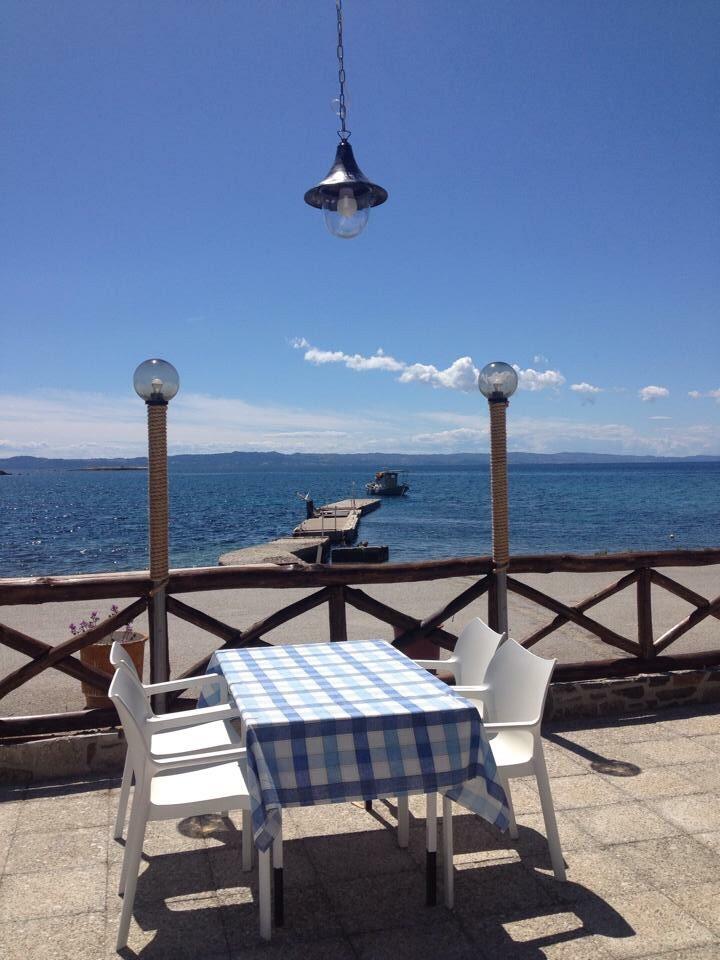
Orange and Kavourotrypes in Sithonia: a stunning coastline that everyone wants to see
If you’ve seen those turquoise-water photos from Halkidiki and thought “that must be photoshopped”, there’s a good chance they were taken at Kavourotrypes, often called Orange or Portokali Beach. This string of rocky coves in Sithonia is genuinely beautiful – and in high season it’s also one of the most crowded places in Halkidiki.
As a small local team at Halkidiki.info – travel guide for Sithonia, Kassandra & Mount Athos with more than 20 years of exploring Sithonia’s coastline, we’ve watched Kavourotrypes change from a quiet secret to a summer hotspot. Here’s an honest, practical guide to why it gets so busy in 2026, how to handle the parking chaos, when to come, where to take photos, and which nearby spots are better if you prefer more space and peace.
Where Kavourotrypes actually is – and what people mean by “Orange Beach”
Kavourotrypes is not one single beach but a series of tiny coves on the east coast of Sithonia, between Sarti and Platanitsi. It sits opposite Mount Athos, with clear views across the bay on a good day. The name literally means “crab holes” – a nod to the rocky shoreline and little inlets carved into the white stone.
When people say “Orange Beach” or “Portokali”, they usually mean:
- The better-known cove with a beach bar and sunbeds (often called Orange or Portokali), reached by a dirt track from the main road.
- The neighbouring coves that are part of the broader Kavourotrypes area, including spots known locally as Paradise Kavourotrypes.
All of this is within a short drive of Sarti, which is the main base for visitors, with plenty of accommodation, tavernas and shops. The whole stretch is small and fragile, which is one reason it feels crowded so quickly once the cars start arriving.
Why Kavourotrypes and Orange Beach get so busy in 2026
From our perspective on the ground, there are a few very clear reasons why this area has gone from “hidden” to “everywhere” in the last decade.
- Social media fame – The mix of white rocks, pine trees and bright turquoise water is extremely photogenic. Instagram, TikTok and YouTube made Kavourotrypes a must-see stop on any Sithonia holiday.
- Small coves, limited sand – Unlike big beaches such as Sarti or Sikia, here you have narrow strips of sand and lots of rock. Even a moderate crowd fills it quickly.
- Easy to reach by car – It’s right off the main Sithonia road between Sarti and Vourvourou, so almost every driver passes the turn-offs and thinks “let’s have a look”.
- Few organised alternatives nearby – Apart from Platanitsi, most nearby spots are either small coves or campsites. Many people converge on the same few access points.
- Word of mouth – For years, locals and regulars talked about Kavourotrypes as a “secret”. The secret is definitely out.
If you’re visiting in July or August, treat it as a very popular attraction, not a quiet wild beach. It’s still beautiful, but you need to plan it like you would any famous spot. For broader strategies beyond this one beach, have a look at our guide on how to avoid crowds in Halkidiki in July and August.
Parking at Kavourotrypes and Orange Beach: the honest reality
Let’s be direct: the biggest pain point at Kavourotrypes in high season is parking. The coves themselves are small, and the land above them was never designed for hundreds of cars a day.
How parking works in practice
Driving the main Sithonia road between Sarti and Vourvourou, you’ll see:
- Dirt tracks leading down from the asphalt, usually signposted informally as “Orange Beach” or “Kavourotrypes”.
- Informal roadside parking where cars line both sides of the main road, especially after mid-morning.
- Rough parking clearings down the tracks, some with a bit of shade, some completely exposed.
The last part of the drive is on unpaved, sometimes bumpy surfaces. After heavy rain, there can be ruts and loose stones. Standard cars manage fine if driven slowly, but low-slung vehicles need extra care.
Typical parking issues to expect
- Arrive late, park far – After around 10:00–10:30 in peak season, the closest spots are usually gone. You may end up parking far up the hill or even on the main road and walking down in the heat.
- Blocked exits – People often park in creative ways. It’s not rare to see cars boxed in or needing several others to move first.
- Risk of fines – Police patrol the main road in summer. Parking too close to bends or blocking traffic can lead to fines or towing.
- Dust and heat – The car parks are dusty, with little shade. If you return in mid-afternoon, your car will be an oven.
Local tips to improve your parking chances
From our visits over many summers, here’s what actually works:
- Arrive very early – If you truly want to be close, aim to park before 09:00 in July and August. Earlier is better.
- Or come later for sunset – After 17:30–18:00, some people start to leave and you can usually find space again. The light on the rocks is beautiful at this time.
- Avoid blocking others – Even if “everyone” is squeezing in, leave yourself a clear exit. People often leave at different times and tempers can flare when someone is blocked for half an hour.
- Consider dropping passengers – If you’re with small children or older relatives, drop them closer to the path and then go back up to find a safer parking spot.
- Think about your tyres – Avoid sharp rocks and deep ruts. A flat tyre here will ruin your day.
Always allow extra time in your schedule for the parking and the walk in/out. That way, you’re not stressed if you need 20–30 minutes just to settle in.
Timetables, opening hours and routes can change without notice. Always double-check locally before you travel.Time-of-day tricks: when to visit Portokali and when to skip it
At busy spots like Kavourotrypes, timing is everything. As Our local team of skippers, travel agents and scuba instructors with over 20 years of experience in Halkidiki is here to help you., we rarely visit at random hours any more; we choose very specific windows depending on what we want from the day.
If you want space and calm
- Early morning (before 09:00) – The water is usually glassy, the light is soft, and you can often choose your spot. This is our favourite time for a quiet swim and a coffee on the rocks.
- Shoulder season – Late May, early June, late September and early October can be magical. You still need to check the weather, but the crowds are dramatically less.
If you want that “lively beach bar” vibe
- Late morning to mid-afternoon – From around 10:30 to 16:00 in July and August, expect music, lots of people, and a busy, social atmosphere.
- Plan for heat – There is some natural shade from pine trees, but not everywhere. Sunbeds go quickly; bring your own umbrella if you’re not relying on the bar.
If you care about photos and light
- Morning light – The sun shines from behind you when you face Mount Athos, which brings out the water’s colour beautifully.
- Late afternoon and golden hour – The rocks warm up in colour and the sea turns deeper shades of blue. It’s also cooler for climbing around on the boulders.
For serious photographers, you might even plan two short visits – one early for clear-water shots and one late for the warm-rock colours – instead of a full crowded day. If you love chasing light, you may also enjoy our guide to the best sunset beaches in Halkidiki for golden-hour photos in 2026.
Best photo spots around Kavourotrypes and Orange Beach
You don’t have to fight for a spot in the middle of the sand to get good photos here. Some of our favourite angles are slightly away from the densest crowd.
Classic views you’ll want to capture
- From the rocks above the main cove – Climb up gently on the smooth white rocks to look down at the turquoise water, pine trees and beach below. This is the “postcard” shot.
- Facing Mount Athos – On a clear day, frame the sea with a bit of rock and pine, and have Athos in the distance. Early morning gives the best visibility across the bay.
- Side coves and little inlets – Walk a bit along the coastline (carefully) to find smaller pools and channels where the water glows in the sun.
Practical photo tips from the rocks
- Wear proper footwear – Flip-flops on smooth rock are a bad combination. Light trainers or water shoes give you much better grip.
- Travel light – If you’re climbing up for photos, leave big bags and valuables with someone you trust on the beach.
- Watch the crowds in the frame – To make the beach look less crowded, aim slightly downwards, focus on rock + water, and shoot tighter compositions.
- Respect privacy – People are often packed close together. Avoid long-lens shots that clearly show faces unless you have consent.
[random_authority_text]
Swimming and safety at Kavourotrypes: beauty with a few hazards
The water at Kavourotrypes is usually crystal clear, with a mix of sandy patches and rocky shelves. It’s lovely for swimming and snorkelling, but the terrain means you need to be a bit more aware than on a flat sandy beach.
What the sea is like here
- Entry points – Some spots have a gentle sandy entry; others have slippery rocks at the shoreline. Take your time choosing where to get in.
- Depth – It gets deep fairly quickly in places. Fine for confident swimmers, but keep non-swimmers close to the shore.
- Snorkelling – The rocks attract fish and make for interesting underwater views. Visibility is usually excellent on calm days.
Key safety points to keep in mind
- No lifeguards – This is not an organised, fully supervised beach. You are responsible for your own safety and your children’s.
- Slippery rocks – Algae and wet patches can be very slick. Move slowly, especially when climbing out of the water.
- Jumping from rocks – You will see people jumping or diving from the rocks, but the depth is not uniform and there can be hidden rocks. We strongly recommend avoiding head-first dives.
- Sea conditions – On windy days, particularly with waves from the east, getting in and out of the water is harder. The current can also feel stronger around the rocks.
Who Kavourotrypes really suits – and who might prefer alternatives
Because we’ve guided many different types of travellers here over the years, we’ve seen who truly enjoys Kavourotrypes – and who ends up a bit stressed by the crowds and terrain.
Great match
- Couples and small groups of friends who enjoy a lively atmosphere, don’t mind some walking and climbing, and are happy to arrive early or stay late.
- Photography lovers looking for dramatic rock-and-sea landscapes.
- Confident swimmers and snorkellers who like exploring rocky coastlines.
Possible, but with extra planning
- Families with older children/teens – They often love the rocks and clear water, but parents need to be on alert for slippery surfaces and deeper water.
- Visitors without a car – You can reach it by taxi from Sarti or occasionally by local transport, but it’s less convenient than staying near a big organised beach.
Maybe not ideal
- Families with very small children who need lots of flat sand and easy access. The heat, crowds and rocks can be overwhelming.
- People with mobility issues – The paths down are uneven, and there are no proper ramps or stable walkways.
- Travellers who hate crowds – In peak summer, this is not a peaceful, empty spot, no matter what older blog posts might say.
If you recognise yourself in the last group, you’ll probably be happier with quieter spots. Our guide to quiet corners of Halkidiki where you can still hear the sea in August is a good starting point.
Nearby alternatives to Kavourotrypes when it’s too busy
One of the advantages of Sithonia is that you’re rarely far from another good beach. If you drive out to Kavourotrypes and find the parking insane, don’t force it. Here are some realistic alternatives within the same general area.
Platanitsi Beach – more space, similar scenery
Just north of Kavourotrypes, Platanitsi combines pine trees, bright water and a long sandy stretch. It has:
- More organised facilities – Sunbeds, beach bars, and sometimes water sports, depending on the season.
- Better parking – Still busy in August, but the layout is more structured than the scattered tracks at Kavourotrypes.
- Family-friendly areas – Gentle entry into the sea on much of the shoreline.
Sarti Beach – easy base with everything close
South of Kavourotrypes, Sarti offers a long sandy beach directly in front of the village. It’s not as dramatic in terms of rock formations, but:
- Parking is simpler – More space, more streets, and no steep rocky paths down.
- Facilities are plentiful – Taverns, supermarkets, bakeries and cafés are all within walking distance.
- Good for mixed groups – Some can stay on the main beach while others take a quick drive to explore smaller coves nearby.
Paradise Kavourotrypes – smaller coves, maybe a bit less crowded
Within the Kavourotrypes zone itself, there are several smaller coves sometimes referred to as Paradise Kavourotrypes. These can be slightly quieter, especially early or late in the day, but:
- Access is usually rougher – Expect steeper paths and more rocks.
- Facilities are minimal or non-existent – Bring everything you need, including water and shade.
Sikia and surrounding beaches – a change of scene
A bit further south, the village of Sikia has a spacious bay with plenty of room to spread out, plus smaller coves around the headlands. If Kavourotrypes feels too intense, Sikia offers:
- Wide sandy areas – Easier for families and those wanting distance from other umbrellas.
- Mix of organised and unorganised stretches – You can choose your vibe.
If you plan to explore several beaches in a day, a good strategy is to check the conditions and crowds at all of them on a map first, then decide where to base yourself.
[beach_map]
Reaching Kavourotrypes from Sarti, Thessaloniki and beyond
Kavourotrypes sits roughly halfway down Sithonia’s east coast. There’s no village directly at the coves, so you’ll be coming from elsewhere.
From Sarti
- By car – Drive north on the main Sithonia road for a short distance. The turn-offs to Kavourotrypes and Orange Beach are on your right, signposted in various informal ways.
- By taxi – Local taxis can take you to the main access tracks, but be clear about your pick-up time and exact spot if you need a return.
From Thessaloniki
- By car – Expect a few hours’ drive, depending on traffic. You follow the main road towards Sithonia, then loop around the peninsula’s northern neck and down the east side.
- By bus – KTEL buses run services from Thessaloniki to Sarti and other Sithonia villages. From Sarti, you’d need a taxi or local transfer to reach the coves.
Road conditions are generally good on the main asphalt road around Sithonia, but summer traffic and bends require attention. The final dirt sections to the coves are the trickiest part, especially for inexperienced drivers.
Timetables, opening hours and routes can change without notice. Always double-check locally before you travel.[sithonia_map]
Seeing Kavourotrypes from the sea: boat trips and snorkelling options
One way to enjoy the beauty of this coastline without fighting for a parking space is to approach it from the water. Around Sithonia you’ll find:
- Day cruises and small-boat excursions from places like Neos Marmaras and Ormos Panagias, sometimes passing or stopping near similar coves.
- Private yacht or sailing charters that can anchor in calmer spots along the east coast when conditions allow.
If you like the idea of exploring Sithonia’s hidden bays by boat, it’s worth browsing options on specialised platforms such as yachts.holiday, which focus on sailing and yacht experiences in Greece. For more general inspiration on coastal days out, If you’d like to explore the coast, ask us about day trips at sea and sailing boat options. and can help you compare different types of trips.
Diving and underwater experiences near Kavourotrypes
While the coves themselves are more about surface swimming and snorkelling, the wider Sithonia coastline offers interesting underwater terrain for divers. Rocky bottoms, small walls and clear visibility make it popular for both beginners and more experienced divers.
If you’re curious about going a bit deeper, have a look at portoscuba.com, a local reference for scuba diving in the region. They provide insight into dive sites, safety, and the kind of marine life you might encounter around Halkidiki’s peninsulas.
Seasonal feel: what to expect at Kavourotrypes month by month
The same beach can feel completely different in May compared to August. Here’s a realistic sense of how Kavourotrypes changes through the season.
Late spring (May–early June)
- Water – Still on the cool side in May, more comfortable from early June.
- Crowds – Light to moderate on weekdays, busier on weekends and holidays.
- Atmosphere – Relaxed, with a mix of locals, early-season travellers and nature lovers.
Peak summer (late June–August)
- Water – Warm and inviting, perfect for long swims.
- Crowds – Very busy most days from late morning onwards, especially in July and August.
- Heat – Strong sun, hot rocks, and little shade if you don’t secure a good spot early.
Early autumn (September–early October)
- Water – Usually still warm in September, cooling gradually in October.
- Crowds – Noticeably thinner after the first week of September; you can often enjoy the coves with much more space.
- Atmosphere – Calmer, with more couples and retired travellers.
How to make the most of your visit – our practical checklist
To finish, here’s a simple, honest checklist based on how we personally plan a day at Kavourotrypes and Orange Beach after two decades of exploring Sithonia.
Before you go
- Decide your priority – Photos? Quiet swim? Lively beach bar? Your timing will depend on this.
- Check the weather and wind – Look at an official forecast site like the Hellenic National Meteorological Service or Meteo.gr to see wind direction and wave height.
- Pack light but smart – Water, hat, sunscreen, some cash, and good footwear for rocks.
When you arrive
- Park with an exit plan – Don’t let a tight parking spot ruin the end of your day.
- Walk a little further – Sometimes the second or third cove along is calmer than the first one you reach.
- Choose your swimming entry – Look for a safe, comfortable way in and out of the water before you commit to a spot.
During your stay
- Respect the rocks and nature – Avoid leaving rubbish, and don’t carve or paint the stones. This coastline is delicate.
- Keep an eye on children and weak swimmers – The beauty of the rocks comes with extra responsibility.
- Stay flexible – If it feels too crowded or stressful, there are excellent alternatives just a short drive away.
Planning the rest of your Sithonia time
If you’re building a wider Halkidiki itinerary, it often works well to treat Kavourotrypes as one “highlight stop” rather than your everyday beach. Mix it with larger, calmer beaches, a sailing or boat excursion, and maybe a quieter inland village like Agios Nikolaos for an evening walk and dinner. If you’d like a more structured plan, Want the full picture? Read our in-depth Halkidiki travel guide before you book. or Not sure where to start? Contact our local travel agency for friendly, personalised advice, seasonal offers and travel options. to help you shape a trip that fits your style.