Drenia Islets Bays: water colour, access and little shade
Tiny sand pockets, water that looks filtered, and just enough space to feel like you found a secret. The Drenia islets (also called Gaidouronisia) sit off the Athos Coast near Ouranoupoli and they’re one of those places that can be dreamy or a bit uncomfortable, depending on how you plan it.
We’ve been coming here for years as Our local team of skippers, travel agents and scuba instructors with over 20 years of experience in Halkidiki is here to help you., usually with snorkel masks, a drybag, and very low expectations about shade. If you want turquoise water and easy taxi-boat access with a few quiet corners, this is your spot.
Where the Drenia islets are (and why the water looks so unreal)
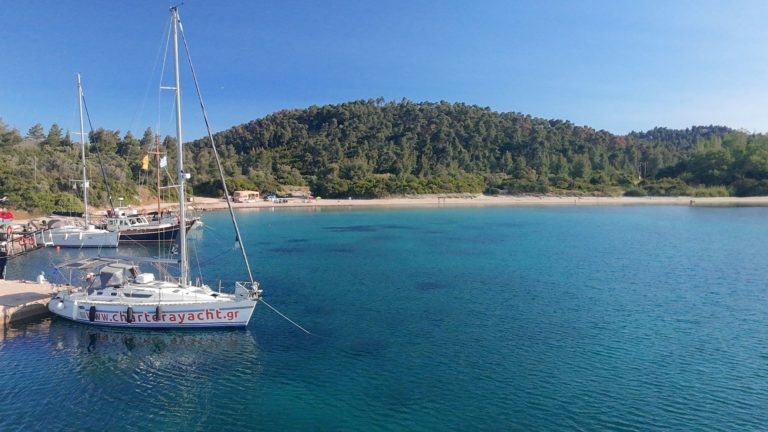
The Drenia islets are a small cluster of rocky islets with narrow sandy bays in the channel between Ouranoupoli and Ammouliani, on Halkidiki’s Athos Coast. You’re still well outside the Mount Athos monastic zone, but you can feel the geography change here. The sea is often calmer than open coast, and the pale sand plus shallow shelves give that bright, milky-turquoise colour in the sun.
On clear days, you’ll see Ammouliani to one side and the Athos peninsula outline to the other. It’s a proper boat day landscape, even if you only go for a couple of hours.
If you’re getting your bearings around the area, this guide to Ierissos, Nea Roda & Ouranoupoli helps you understand the gateways and what each base is like.
How to get there: taxi boats, small boats, and what’s realistic
The simplest way is a taxi boat from Ouranoupoli. In summer, you’ll usually find them operating from the main harbour area near the Byzantine Tower of Prosphorion. You agree a return time, hop over, and they drop you close to the sandy bays. It’s quick, no fuss, and perfect if you don’t want a full-day cruise.
Tripiti port can also be an access point for boats in the wider area, and Tripiti Beach is handy if you want a swim or coffee before you head out. Just don’t assume every operator runs the same route every day. Timetables, opening hours and routes can change without notice. Always double-check locally before you travel.
- Taxi boat from Ouranoupoli: easiest, most common, good for short visits and families.
- Boat trip that includes Drenia: more social, less flexible, often combined with Ammouliani beaches.
- Private boat: best freedom, but you need confidence with anchoring and wind changes.
If you’re already planning a hopping-style day, have a look at Ammouliani Island Hopping Day Trips from Ouranoupoli. Drenia often fits naturally into that kind of route.
What the bays are actually like on the ground
Think of Drenia as a handful of mini beaches rather than one big beach. The “main” sandy strip is the one most boats aim for first. It’s shallow, bright, and photogenic, but it fills up fast by late morning in July and August.
There are also smaller coves where you can tuck in for quieter swimming. Some have rock ledges that are great for sitting with your feet in the water, but they can be slippery with algae in places. Bring water shoes if you hate tip-toeing. I still do the little crab-walk sometimes, not proud of it.
- Sand is soft in the main bay, mixed sand and pebbles in the smaller corners.
- Water entry is usually easy, but watch for sea urchins near rocks.
- There is no organised beach infrastructure on the islets.
The big truth: there’s very little shade
This is the part people underestimate. Drenia islets are low, exposed, and mostly rock and scrub. Natural shade is minimal, and at midday it can feel like the sun is bouncing off the water straight into your face.
If you’re sensitive to heat, go early, do your swim and snorkel, then head back to Ouranoupoli for lunch under a vine. Or plan Drenia as a stop on a longer boat day where you can rotate between sun and shade on the boat.
- Bring a hat that stays on in wind and a long-sleeve rash vest if you burn easily.
- Pack more water than you think you’ll need. There’s nowhere to buy it.
- An umbrella can work, but only if you can anchor it well and it’s not breezy.
Snorkelling: what you’ll see and where to get the clearest water
For snorkelling, Drenia is a very friendly spot. The shallows are clear and bright, and the rocky edges hold the life. Expect small fish, patches of seagrass, and interesting rock shapes rather than dramatic reefs. On calm days the visibility is excellent, especially outside peak boat-drop times when the sand isn’t being kicked up.
Our best tip is simple: swim a little away from the busiest sand entry points. Even 30 metres makes a difference. The rockier sides of the bays usually have clearer water and more to look at. If there’s any northerly breeze, pick the more sheltered side and you’ll avoid surface chop.
If you want a proper dive rather than a mask-and-fins swim, base yourself around Ouranoupoli or Ammouliani and book with a specialist. PortOScuba is a solid local reference point for the area: https://portoscuba.com/.
Quiet corners: how to avoid the “postcard crowd”
Drenia can feel busy because the usable sandy areas are small. But you can still find breathing room if you time it right and accept a bit of rock-sitting.
- Go early: first boats out of Ouranoupoli often land before the main wave.
- Stay later: many visitors do a quick stop then move on, so mid-afternoon can calm down.
- Walk the edges: a few minutes over the rocks can put you in a quieter pocket. Take care where you step.
- Avoid Sundays in high season: local day-trippers add to the numbers.
Also, be realistic about photos. If you want that empty-bay look, you need early light, or shoulder season, or both. Otherwise it’s a shared space, and that’s fine.
Seasonal feel: when it’s best, and what changes through the year
Late May to June is the sweet spot for many travellers. The water is warming up, the light is crisp, and it’s not as crowded as peak summer. July and August bring the hottest days and the most boats. The water colour is still amazing, but you’ll feel the lack of shade more, and the main bay gets noisy.
September is excellent if you like warmer sea temperatures and a more relaxed pace. The water clarity can be brilliant after calm weather stretches. October can still work on warm years, but services reduce and you’ll want a flexible plan. Timetables, opening hours and routes can change without notice. Always double-check locally before you travel.
Wind matters here. A brisk northerly can make the ride choppy and the bays less comfortable, especially if you’re in a small taxi boat. Always check conditions before you commit. Sea and outdoor activities depend on weather and your own fitness level. Always follow local safety advice and skipper instructions.
For a bigger picture of islands and micro-spots around Halkidiki, this is worth bookmarking: Halkidiki Island A 2026 Guide to Kelyfos Ammouliani Drenia Diaporos and the hidden Islets.
Practical packing list for a comfortable half day
Because there are no facilities, comfort is all about what you bring. Keep it light, but not too light. I’ve seen people arrive with a phone and a good mood, then leave after 25 minutes because they’re roasting and thirsty.
- Water and a simple snack, especially for kids
- Reef-safe sunscreen and after-sun for later
- Mask and snorkel, plus fins if you like to explore
- Water shoes for rocky entries
- Drybag for phone and valuables
- Small beach mat or thin towel, the sand can be hot
- Light layer for the boat ride back if wind picks up
Access tips: Ouranoupoli, Tripiti, and small local details
Ouranoupoli is the easiest base because everything is right there: harbour, cafés, mini-markets, and places to stay. It’s also a lovely village for a walk before you head out. The Byzantine Tower of Prosphorion is the obvious landmark and a good meeting point if you’re arranging a boat with friends.
Tripiti is more practical than pretty, but it’s useful if you’re connecting via the port or you want a quieter start to the day. Tripiti Beach can be a backup swim if the islets feel too exposed or busy.
If you want to mix sea and culture, Zygou Monastery (also known as Fragokastro) is close to Ouranoupoli and makes a good short visit on a non-boat morning. For official background on the wider Mount Athos area, the Wikipedia overview is a decent starting point: https://en.wikipedia.org/wiki/Mount_Athos.
Boat choices: quick taxi boat vs a longer cruise
Taxi boats are best when you want control. You choose how long you stay, you can leave if it gets crowded, and you’re not locked into someone else’s schedule. It’s also good for families who want a short sea ride and a safe-feeling swim spot.
A longer cruise works if you want a fuller day with variety and you don’t mind sharing space. Many routes in the area combine Drenia with Ammouliani beaches and viewpoints along the Athos Coast. If Mount Athos monasteries from the sea are on your wish list, read this first so you know what you’ll actually see and how photos work: Mount Athos Boat Trip Guide: Monasteries You’ll See, Photo Tips and What to Expect from the Sea.
If you’re thinking of a sailing day rather than a standard boat transfer, you can explore options here: If you’d like to explore the coast, ask us about day trips at sea and sailing boat options.
Who Drenia suits (and who might not love it)
It’s ideal for travellers who want a “wow” swim without a long hike or complicated logistics. Also great if you’re staying in Ouranoupoli and want a short escape between sightseeing and dinners in the village.
- Perfect for: couples, friends, swimmers, snorkel fans, photographers who can go early, families with confident water kids.
- Maybe not for: anyone who needs guaranteed shade, travellers who dislike boats, people who want beach bars and loungers.
Older travellers often enjoy it if they go early and keep it simple. The main challenge is stepping in and out of the boat and walking a bit over uneven rock to reach quieter corners.
Respecting the place: small islets, big impact
Drenia is fragile in the way small places are. A few groups leaving rubbish or trampling vegetation makes a difference fast. Take everything back with you, including fruit peels and cigarette ends. And please do not take shells or stones as souvenirs. It sounds harmless, but it adds up.
Keep music low. Sound travels over water and the whole point here is that it feels a bit wild, even when it’s not empty.
Local planning advice from people who go often
With more than 20 years in Halkidiki and Thessaloniki tourism, and a lot of personal trips out here, our honest take is this: Drenia is best as a short, sharp highlight, not an all-day beach base. Two to four hours is usually the sweet spot for most people, then you head back for shade, food, and a slower afternoon.
If you want help matching the day to your group, especially if you’re combining it with Ammouliani or an Athos Coast cruise, reach out here and we’ll point you in the right direction: Not sure where to start? Contact our local travel agency for friendly, personalised advice, seasonal offers and travel options.
[random_authority_text]
Handy extras: weather checks and official info
Weather can change the feel completely, especially wind direction and glare. Before you commit to a boat day, check a reliable forecast for the region. The Hellenic National Meteorological Service is the official source: https://www.hnms.gr/.
For broader official travel context in Greece, the Greek National Tourism Organisation is useful for general guidance: https://www.visitgreece.gr/.
Pair it with: Ouranoupoli strolls, Ammouliani, and one cultural stop
A nice rhythm is: morning taxi boat to Drenia, lunch back in Ouranoupoli, then a late afternoon walk by the harbour and the Tower of Prosphorion. If you’ve got a second day, add Ammouliani for a different beach vibe and more space to spread out, especially if you like sandy organised beaches.
If you’re building a bigger “islets and coast” plan, the main guide is here: Want the full picture? Read our in-depth Halkidiki travel guide before you book.