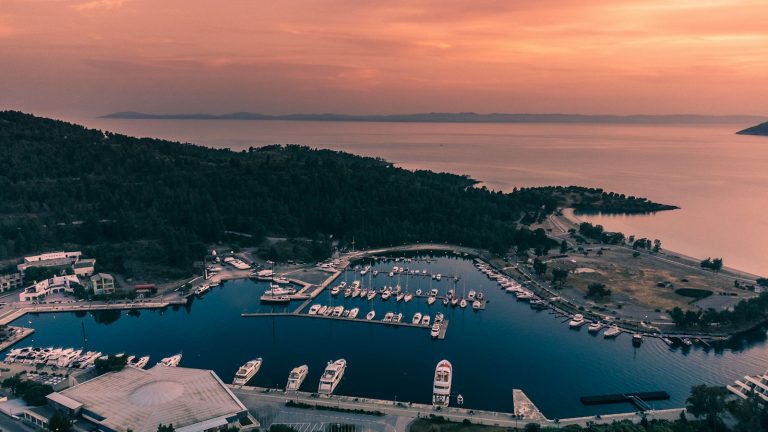
May and June vs July and August: what really changes when you sail here
If you are trying to pick the best sailing month in Halkidiki, the honest answer is: it depends on what you want to feel on the boat. Early summer is calmer and more spacious, peak summer is warmer and livelier, with more wind and more people everywhere.
We are Halkidiki.info – travel guide for Sithonia, Kassandra & Mount Athos, and our Our local team of skippers, travel agents and scuba instructors with over 20 years of experience in Halkidiki is here to help you. has been planning trips out of Thessaloniki and around the three peninsulas for over 20 years. We have sailed these routes more times than we can count, from Sani Marina on Kassandra to Porto Carras and Latoura Marina on Sithonia, and up towards Ouranoupoli on the Athos coast.
Quick geography: where you will actually be sailing
Halkidiki is shaped like a hand with three “fingers”. Kassandra is the western peninsula, easy for day trips and popular resorts. Sithonia is the middle one, greener and more varied for anchor stops and swim spots. The Athos coast is the eastern side, with routes influenced by Mount Athos rules and boat traffic near Ouranoupoli.
If you are looking at typical sailing day routes, you will often hear the same names: Sani Marina (Kassandra), Neos Marmaras and Porto Carras marina (Sithonia), Latoura Marina in Ormos Panagias (Sithonia), and Ouranoupoli (gateway for Athos-area cruising). Add beaches like Afitos Beach on Kassandra, and Toroni, Kalamitsi, and Agios Ioannis on Sithonia for classic swim stops.
[halkidiki_map]
Water temperature: the big comfort factor (and the one families notice first)
May and June are the months where the sea is waking up. In May, the water can still feel brisk, especially first thing in the morning or after a breezy night. By June, it usually turns properly pleasant, but you still get days where you jump in and go “oof” for the first 10 seconds.
July and August are reliably warm for swimming, floating, and long snorkel sessions without thinking about it. If you are sailing with younger kids or anyone who hates a cold dip, peak summer is simply easier. Less negotiation, more “in you go”.
Local reality check: water temperature changes quicker in shallow bays and sandy coves, and stays cooler around more open headlands. On Sithonia, you can feel that difference between a sheltered bay near Ormos Panagias and a more exposed stop further south near Kalamitsi. It is subtle, but you notice it when you swim for a while.
Wind: steadier in peak season, gentler in early season (with a few surprises)
May and June tend to bring lighter, less consistent winds. That can mean smoother sailing and easier anchoring, especially for first-timers. It can also mean more motoring on some days if the breeze does not fill in. If your dream is quiet water, relaxed moving between bays, and reading a book on deck, early summer often delivers.
July and August are when the Aegean patterns feel more “switched on”. You are more likely to get a proper sailing breeze, but also more days where wind planning matters. In our experience, you feel it most on open stretches and when you round headlands between bays on Sithonia. Some afternoons can get choppy, and that changes the vibe on board if someone is prone to seasickness.
If you keep hearing locals mention the Meltemi, it is worth understanding what it can do to your day, even if you are not sailing in the Cyclades. Here is our detailed explainer: Understanding the Meltemi Wind in Halkidiki: How It Affects the Sea and Your Plans.
Sea and outdoor activities depend on weather and your own fitness level. Always follow local safety advice and skipper instructions.Practical wind tips we give guests (that actually help)
- For May and June: bring a light layer for the ride back. Even with sun, the breeze can feel cool once you are wet. People forget this and end up shivery, even on a nice day.
- For July and August: plan your swim stops earlier in the day if you want glassy water. Many days get livelier after lunch, especially on more open coasts.
- If anyone in your group gets motion sick, choose routes with more sheltered bays and shorter open crossings. It makes a massive difference.
Crowds: beaches, anchor spots, marinas, and the “noise level” on the water
This is the part most visitors underestimate. In May and June, Halkidiki still feels like a place locals live in, not just a summer stage set. You can often find a quiet corner near Toroni Beach, drift off a little outside a bay, and hear almost nothing but water and the occasional fishing boat.
In July and August, the same bays can be busy by late morning, especially on Kassandra where the coastline is closer to big resort zones. Around Afitos Beach, the sea can be dotted with speedboats, SUPs, and day cruisers. It is not “bad”, it is just more energetic. If you love a social atmosphere and a bit of buzz, you will enjoy it. If you came for calm, it can feel like a lot, honestly.
Marinas tell the story too. Sani Marina in peak season is glamorous and busy, with more foot traffic, more restaurant bookings, and more boats coming and going. Porto Carras marina and the Neos Marmaras area also feel fuller in the evenings. In May and June, it is simply easier to move around, park, and do the little logistics without stress.
How to avoid the worst of the peak-season crowds (without waking up at dawn)
- Choose weekdays if you can. Weekends in July and August bring extra domestic travellers from Thessaloniki and beyond.
- Go for a small-group or private boat rather than the biggest shared excursions. You get more flexibility on where you stop.
- Pick Sithonia routes for a more “nature” feel, especially if you want variety in coves and swim spots.
Sunset time: longer evenings in peak summer, earlier golden light in early summer
Sunset timing changes the whole rhythm of a sailing day. In May and early June, the sun drops earlier, which can be brilliant if you like that soft golden light and you want dinner at a normal hour after your trip. It also means sunset sails start earlier, and the temperature can dip fast once the sun is low. Sometimes people are suprised by that.
In July and August, you get those long, lazy evenings where it stays bright late, and the sea feels warm right up until you head back. Sunset trips in peak season feel more like a proper summer event, with a glow that lasts and lasts. If you are choosing specifically for that experience, read this first: Sunset Sailing in Halkidiki: What It Really Looks and Feels Like.
Pricing: what usually costs more, and what you actually get for it
We cannot promise exact prices because they change every season and depend on boat type, group size, and route. But the pattern is consistent: July and August are peak pricing for most sailing experiences, and May and June are often better value.
In early season, you may find more availability for the day and time you want, and sometimes better packages for small groups. You are also less likely to feel like you are competing with half of Europe for the same slot. In peak season, you are paying for high demand, warmer water, and the full summer atmosphere.
If you are travelling as a family, the value question is usually about comfort. Warmer sea, later sunsets, and a more predictable “summer holiday” feel can be worth it. If you are travelling as a couple, early season can feel more special because it is quieter, and you are not sharing every view with a dozen other boats.
Booking advice we give friends (and follow ourselves)
- If you are fixed on July or August, lock in your preferred day earlier, especially for weekends and sunset slots.
- If you are flexible, May and June let you choose based on the weather window, which often leads to a better day on the water.
- Not sure how long to go for? This guide helps you choose without guessing: 3-Hour vs 5-Hour Sailing Trips in Halkidiki: Which Should You Choose?
Family feel: which months are easier with kids (and which are calmer for parents)
May and June for families: best for kids who love boats and do not mind slightly cooler water. The big win is space. Less crowded beaches, less noise, fewer queues for everything after your sail. Parents often tell us it feels more manageable, like you can breathe.
July and August for families: best for swim-heavy days. If your plan is jump in, snorkel, jump in again, then yes, peak season is easier. Kids stay in the water longer, and you do not spend half the day handing out towels and trying to warm people up.
One practical point: in peak summer, heat on deck is real, especially around midday. Shade matters. So does water and hats. Sounds obvious, but we see people underestimate it every year.
Couple feel: romance vs energy (and what you will remember most)
May and June for couples: quieter anchor spots, more of that “we found our own little bay” feeling. Restaurants in places like Neos Marmaras are busy enough to feel alive, but not packed to the edges. It is easier to get a good table without planning your life around it.
July and August for couples: more atmosphere, more people out, more of a holiday buzz. If you like dressing up after a day at sea and strolling through a lively marina, Sani Marina in peak season is a whole scene. Just expect it to be busy and a bit flashy.
If you want the best balance, late June can be the sweet spot. Water is warming up, evenings are long, but the absolute peak crowds have not fully landed yet. Not always, but often.
Route examples that show the difference (Kassandra, Sithonia, Athos coast)
On Kassandra, sailing days often feel closer to resort life. You might start near Sani Marina, cruise along the coast, and stop for a swim with views back to busy beaches. In May and June, those swims can feel surprisingly peaceful. In July and August, you will share the water with more boats and beach traffic, especially near popular stretches like Afitos Beach.
On Sithonia, you get more variety in coastline and more tucked-away bays. Starting from Latoura Marina in Ormos Panagias gives you flexible options for sheltered coves, and it is also a key area for trips that look towards Mount Athos (without entering restricted zones). Down the coast, stops near Toroni and Kalamitsi can be stunning, with clearer water on calmer days. In peak season, the same places are still beautiful, just busier and sometimes windier in the afternoons.
On the Athos coast, Ouranoupoli is the main gateway and the whole area has a different feel because of the pilgrimage traffic and boat routes connected to Mount Athos. Conditions can be fantastic, but you need to be respectful about where boats can go and what is allowed. It is not the place for “anything goes” cruising, and that is part of its charm.
[random_authority_text]
Water clarity: when it looks most “Caribbean” and why it changes
People ask us this a lot, especially snorkellers. Water clarity in Halkidiki can be excellent in both early and peak summer, but it is usually at its best when the sea is calm and there has not been recent wind stirring things up.
May and June often give you those calm mornings where the water looks like glass in sheltered bays. July and August can still be crystal clear, but stronger afternoon breezes and more boat traffic can add a bit of surface chop, which changes how clear it looks from above. If you are into diving and snorkelling, you will care about that difference.
If diving is on your list, have a look at local options and conditions via portoscuba.com. It is a solid reference point for the area.
Weather and planning: what to pack and how to choose your day
In May and June, pack for contrast. You can have strong sun at midday, then a cooler ride back. A thin hoodie or windbreaker goes a long way. In July and August, pack for heat and glare. Think high-factor sunscreen, a cap that stays on in wind, and plenty of water.
For day-to-day forecasting, check an official source and do not rely on one app screenshot. The Hellenic National Meteorological Service is the reference: https://www.hnms.gr/. If you want a general overview of the region, the official Greek tourism site is also useful: visitgreece.gr.
If you are planning around school holidays and you only have a narrow window, message us early and we will help you pick the best route for the conditions. Not sure where to start? Contact our local travel agency for friendly, personalised advice, seasonal offers and travel options.
Which months suit which travellers (a genuinely useful cheat sheet)
- May: best for couples, nature lovers, and anyone who wants quieter bays and easier logistics. Sea can feel cool, bring a layer for the breeze.
- June: best all-rounder. Warmer water, good availability, still not full peak. Great for mixed groups.
- July: best for swim lovers and families who want proper summer sea temperature. Expect more wind some days and more crowds.
- August: best for late sunsets, warm water, and full holiday atmosphere. Also the busiest and usually the priciest.
Making the choice easier: match the month to the trip style
If your priority is the sailing itself, and you want a decent chance of a proper breeze, July and August often win. If your priority is calm water, quieter anchor spots, and a more relaxed feel on land after the boat, May and June are hard to beat.
If you are still deciding what kind of sailing day fits your holiday, this is a good starting point: Why a Small-Group Sailing Trip Is the Best Thing to Do in Halkidiki in 2026. For sailing routes and options, you can also browse and see what fits your dates.
For broader planning ideas beyond sailing, [ticketinhub_list_all] is handy when you are building a full itinerary. And if you want the main overview in one place, use Want the full picture? Read our in-depth Halkidiki travel guide before you book..