Behind the scenes: what a “normal” trip day actually looks like
People usually see the easy bit. You arrive at the marina, step onboard, and a few minutes later Halkidiki looks like a postcard. What you do not see is the early start, the weather calls, the checks, and the small decisions that keep a day on the water smooth.
We are Halkidiki.info – travel guide for Sithonia, Kassandra & Mount Athos, a local Halkidiki and Thessaloniki tourism team with more than 20 years of hands-on experience. We have run these routes in calm seas, meltemi breezes, and those sneaky shoulder-season chop days that look fine from the beach but feel very different offshore.
Where we operate (and why it matters for planning)
Most of our daily logistics revolve around Kassandra and Sithonia. A common pickup point is Chrousso marina in Paliouri on Kassandra, with nearby reference points like Chrousso Beach. On the Sithonia side, hubs like Neos Marmaras and Porto Carras marina matter for routes, shelter options, and service access.
We also keep an eye on places that shape the day’s sea state, like Ormos Panagias and Latoura Marina, plus coastal stops such as Agios Nikolaos village, Agios Ioannis Beach near Nikiti, and Neos Marmaras Beach. If you have travelled Halkidiki before, you will know each bay behaves differently depending on wind direction, even when they are not far apart.
[halkidiki_map]
Our morning routine: the checks start before you arrive
1) Weather, sea state, and the “real” forecast
We start with forecasts, but we do not stop there. For a boat day, the important bits are wind direction, wind strength, gusts, and how that wind builds waves over distance. A light northerly might be fine in one area and uncomfortable in another, depending on exposure.
We cross-check a few sources and then add local knowledge from the marinas and coastline. Conditions can differ between Kassandra’s side and Sithonia’s side, and even between open water and a sheltered bay. If you are curious, a good public reference is the Hellenic National Meteorological Service at hnms.gr. We also keep a practical eye on marine warnings and what is actually happening outside, not just what an app says.
Then comes the part guests rarely hear: we decide what kind of day it is. Not just “go or no-go”, but also whether we adjust route, change the timing of swim stops, or pick a more sheltered lunch anchorage. It is a bit like choosing a hiking route. Same region, totally different feel depending on the day.
2) Boat readiness checks (the boring stuff that keeps you safe)
Before anyone steps onboard, we do a full walkaround and a systems check. It is routine, but we treat it like it is the first time, every time.
- Engine and electrics: oil level, cooling water flow, belts, battery charge, and instrument readings.
- Safety gear: lifejackets in the right sizes, throwable flotation, first aid kit, fire extinguishers, and signalling equipment.
- Deck and fittings: lines, cleats, anchor, ladder, and anything that can rattle loose once the sea picks up.
- Navigation and comms: charts, GPS, VHF radio checks, and phone backup.
We also think like guests. Is the deck tidy. Is there shade set up. Is the boarding area safe and not slippery. Little details that make families relax and nervous swimmers feel steady.
3) Guest list, special notes, and “who needs what”
Every morning we review bookings and notes. It is not just names and numbers. It is who is travelling with kids, who has a shoulder issue, who is nervous in deep water, and who gets seasick easily. That changes how we brief, where we stop, and how we pace the day.
If you are wondering whether you will fit in on a trip, have a look at Who Our Trips Are For: Families, Nervous Swimmers and Adventurous Divers. It is basically the same conversation we have in the office, just written down.
How we decide: go, adjust, or cancel
What triggers a route change (even when we still run the trip)
Most “weather decisions” are not dramatic. They are small adjustments that protect comfort and make the day nicer. A few common examples:
- Wind against the route: if the wind direction makes the return leg bumpy, we might flip the order of stops so you have the rougher part earlier, when everyone has more energy.
- Chop in open water: we may choose a more sheltered bay near Chrousso Beach instead of pushing further out.
- Visibility and water clarity: after a blow, the water can look milky near some beaches. We will aim for clearer spots where snorkelling feels worth it.
On paper it is the same “boat trip”. In reality, it can be a totally different vibe. And honestly, that is why booking with a local operator matters more than people think.
When we cancel (and why it is not a “maybe”)
Cancellations are the hardest call because people have planned their holiday around the day. But we do not gamble with the sea. If the forecast and local conditions point to unsafe or genuinely uncomfortable boating, we cancel or reschedule. That includes:
- Strong winds with high gusts that make boarding and moving around risky.
- Sea state that would turn a relaxed day into a tiring, bouncy ride.
- Thunderstorm risk close to the route, even if it looks sunny at breakfast.
We would rather lose a day’s revenue than put guests in a situation where they are scared, soaked, or exhausted. If you want to understand our approach before you book, Why Book Your Boat Trip or Dive with PortoScuba explains how we run things and what we prioritise.
What you can do as a traveller to avoid disappointment
- Keep one flexible day: if your schedule allows, leave a spare day for rescheduling a sea activity.
- Tell us the truth about comfort: if someone is anxious or prone to seasickness, say so. We can often choose a calmer plan.
- Do not rely on the beach view: a flat-looking bay can hide wind offshore. It happens a lot.
If you are planning a specific date around a special occasion, message us early and we will talk through the most stable time windows. Not sure where to start? Contact our local travel agency for friendly, personalised advice, seasonal offers and travel options.
Safety routines onboard: simple, consistent, non-negotiable
Boarding and briefing
At Chrousso marina we keep boarding calm and organised. Bags go where they will not trip anyone. Kids get settled first. Then a short briefing that covers the real-life stuff people need, not a lecture.
- Where to sit for the smoothest ride.
- How to move around when the boat is underway.
- What to do when we anchor, including ladder use and keeping fingers clear.
- Where the safety kit is and who to ask if you feel unwell.
We repeat key points more than once because, in the moment, people are excited and half listening. It is normal. We would rather sound slightly repetitive than have someone guess.
Swimming and snorkelling safety
Most guests come for the swim stops. That is where we are most alert. We choose anchoring spots with good holding, clear entry, and enough space away from other boats. We also watch how people behave in the water, not just what they say on land.
Sea and outdoor activities depend on weather and your own fitness level. Always follow local safety advice and skipper instructions.- Nervous swimmers: we keep it gentle. Use flotation, stay near the ladder, and take it step by step.
- Kids: constant supervision and clear boundaries. The sea is fun, but it is not a playground you can switch off in.
- Strong swimmers: we still ask you to stay within the agreed area. Currents and boat traffic are not a debate.
If you are the type who wants more than snorkelling, we also run diving. For first-timers, Beginner’s Guide to Scuba Diving in Halkidiki: What First-Timers Should Know answers the questions people are usually shy to ask.
Gear care: why we obsess over small things
Sea air is brutal on equipment. Salt gets everywhere, sun cooks plastics, and sand finds its way into zips you did not even know existed. The difference between “fine for a season” and “reliable every day” is maintenance, and it is not glamorous.
Boat gear and deck kit
- Rinse and wipe-down after trips, especially around fittings and moving parts.
- Check lines for wear and replace before they become a problem.
- Inspect ladders, rails, and anchor gear for corrosion and looseness.
We also keep the boat guest-ready. Shade, seating, clean surfaces, and a deck that feels safe to walk on barefoot. If it is sticky or sandy, it gets sorted. No one wants to spend their holiday sitting in grit, do they.
Dive and snorkel equipment
For diving days, the kit routine is even stricter. Regulators, BCDs, masks, fins, and exposure suits all get cleaned and checked. Anything that feels “a bit off” gets pulled and inspected properly. It sounds obvious, but it is easy to get complacent when you are busy. We do not let that happen.
If you are a certified diver and want the underwater reality of Halkidiki, including what you tend to see and how conditions vary, read Scuba Diving in Halkidiki for Certified Divers: What to Expect Underwater. It will help you choose the right day and set expectations.
For scuba and snorkel info and local dive context, you can also browse portoscuba.com.
Routes, stops, and the places you might hear us mention
On a typical day trip, we talk in “shelter” and “exposure” rather than just beach names. Still, guests like landmarks. Depending on conditions, we might reference areas around Paliouri and Chrousso Beach on Kassandra, or we may look towards Sithonia waters near Neos Marmaras and Porto Carras marina.
Some days we aim for a calm swim stop near Agios Ioannis Beach by Nikiti. Other days, the sea feels better closer to bays near Ormos Panagias and the Latoura Marina area, especially if we need a more protected option. Agios Nikolaos village is also one of those places that makes people slow down, proper Greek harbour vibes and a nice change of pace.
[sithonia_map]
Seasonal feel: what changes through the year
Halkidiki is not the same sea in May as it is in August. Water clarity can be brilliant in early season. Then summer brings heat, busy marinas, and more boat traffic. In late season, you often get warm water and quieter bays, but the weather can flip faster, so we watch forecasts more closely.
One local truth: wind direction matters more than temperature. A hot day with an awkward wind can feel worse than a cooler day with calm seas. That is why we sometimes say no even when it looks like perfect beach weather.
If you want an official reference for the wider region, the Greek National Tourism Organisation is a solid starting point: visitgreece.gr.
How to reach the pickup points (without stress)
Most guests reach us by car from Thessaloniki, or from resorts around Kassandra and Sithonia. Chrousso marina in Paliouri is a straightforward drive, but in high summer the last stretch can feel busy and parking takes a bit longer than people expect. If you are staying around Neos Marmaras, Porto Carras marina is a useful reference point for the area’s boating infrastructure and road access.
Our practical tip is simple. Aim to arrive a little earlier than you think you need. It gives you time for parking, a toilet stop, and a calm boarding. Turning up flustered is the fastest way to feel seasick later, weirdly enough.
If you are using public transport, routes and timings can change by season. Check official updates close to travel day. Timetables, opening hours and routes can change without notice. Always double-check locally before you travel.
For general regional orientation and road context, Wikipedia’s overview of Halkidiki is handy: en.wikipedia.org/wiki/Chalkidiki.
What happens if the weather changes mid-trip
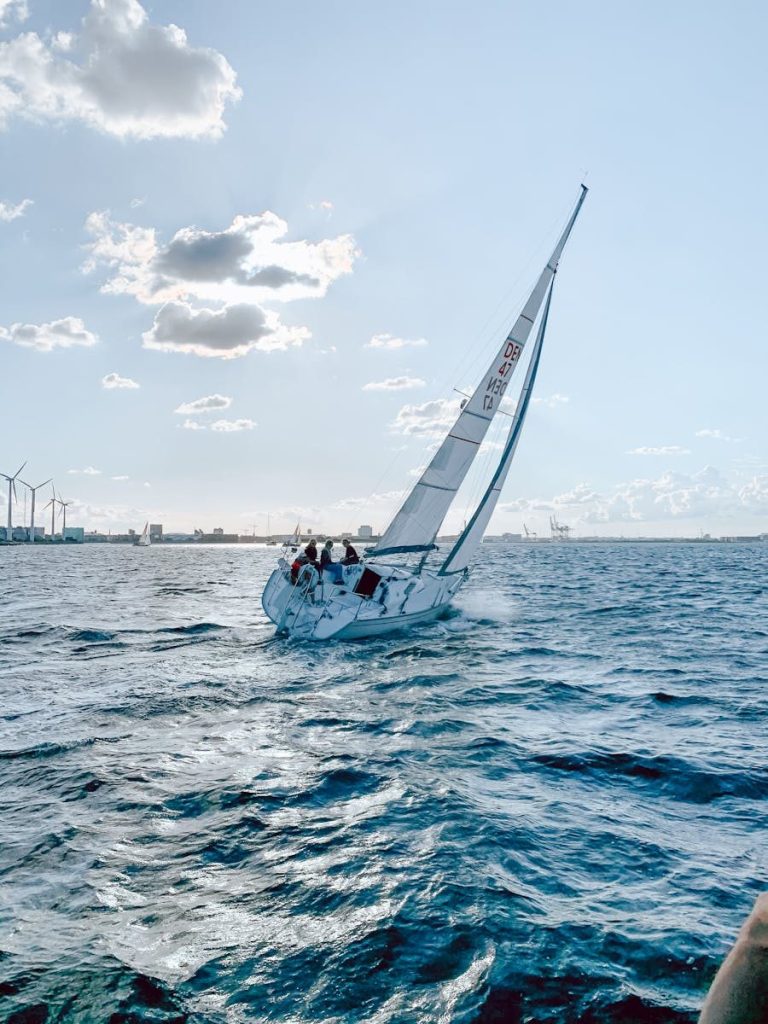
Even on a “good forecast” day, we keep watching the horizon and the wind on our skin. If conditions shift, we adapt. That might mean moving to a more sheltered bay, shortening a swim stop, or heading back earlier so the return is comfortable.
We also manage expectations onboard. If we change plan, we explain why in plain English. No drama, no pretending it is “always like this”. Sea days are dynamic, and guests deserve honesty.
Common questions we get (and straight answers)
“Will I get seasick?”
Maybe. It depends on sea state, where you sit, and how you are feeling that day. Eat something light, avoid too much alcohol the night before, and tell us early if you are worried. We can usually place you in the best spot and pace the day sensibly. Sitting outside with fresh air often helps, even if your instinct is to hide.
“Is it safe for kids?”
Yes when conditions are right and everyone follows the crew’s guidance. We are careful about sea state, we brief clearly, and we keep an eye on the water at swim stops. But parents still need to parent. It sounds obvious, but holiday brain is a real thing.
“What should I bring?”
- Sun protection and a hat. The reflection off the water catches people out.
- A light layer for the ride, especially outside peak summer.
- Water and snacks if you like to nibble.
- A dry bag for phone and valuables if you have one.
- Reef-safe behaviour. Do not stand on rocks or mess with sea life.
Also bring patience. Boarding takes a few minutes, and it runs better when everyone lets the crew do their thing, even if you are excited and ready to jump in.
Why we sometimes say “not today” (and why that’s a good sign)
Anyone can run a boat on a flat day. The real test is judgement on the borderline days. That is where experience shows, not in big speeches, but in small choices you might not notice. Changing a stop. Adjusting timing. Calling it early. Cancelling when it is the right call even if it is annoying.
[random_authority_text]
If you are browsing options for a sea day in Halkidiki, you can see our sailing side here: yachts.holiday. And if you are ready to look at trip options, [ticketinhub_list_all] fits nicely for comparing what’s available on your dates.
Booking tips that make your day smoother
- Choose the right trip for your group: a relaxed swim and snorkel day is very different from a more adventurous plan.
- Ask about the wind: not just “is it sunny”, but “what is the wind doing”. We will answer honestly.
- Keep communication open: if you are running late or have a health concern, tell us early. We can usually help, but we cannot guess.
If you want help matching the right experience to your holiday base, travel dates, and comfort level, send a message. We will be straight with you about what will feel best. Not sure where to start? Contact our local travel agency for friendly, personalised advice, seasonal offers and travel options.
Want the full picture? Read our in-depth Halkidiki travel guide before you book.