Family-friendly sailing days in Halkidiki: how to keep everyone happy
A day on a small sailing boat in Halkidiki can be the highlight of your holiday, if you plan it like a parent, not like an Instagrammer. We have been taking families out on these waters for more than 20 years, and the difference between “best day ever” and “never again” is usually shade, snacks, and timing.
Halkidiki is in Northern Greece, southeast of Thessaloniki, with three peninsulas. For family sailing, most small-boat day routes focus on Sithonia and Kassandra because they offer sheltered bays, short hops, and easy returns to port when kids have had enough.
Where to base yourself for an easy family sail
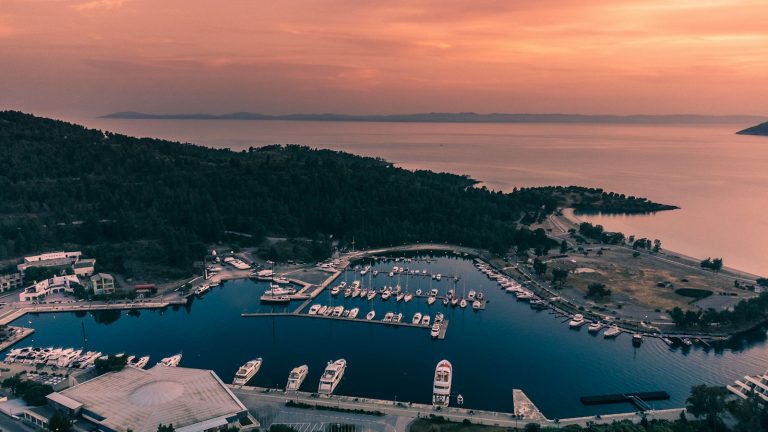
If you want the smoothest day, start from a harbour with proper facilities and quick access to calm water. In Sithonia, Porto Carras marina near Neos Marmaras is a solid base with shelter and services nearby. Further north, Ormos Panagias and the nearby Latoura Marina are practical for family groups because you can be swimming at Trani Ammouda quickly, without a long open-water leg.
On Kassandra, families often like the waters near Nea Potidea because the coastline gives you options to tuck in if the wind picks up. Afitos is better as an onshore visit paired with a swim stop, rather than a “busy harbour day”, but it works well if your plan is half sailing, half beach and village.
When you are looking at a route that mentions several stops, it helps to see them laid out first.
[halkidiki_map]
Age guidelines (the honest version)
Every child is different, but after years of watching families on board, these are the patterns we see most often in Halkidiki conditions.
- Ages 0 to 12 months: possible on very calm days with a private boat and lots of shade, but it is rarely relaxing. Heat, naps, and feeding are hard on a moving deck. If you do it, keep the trip short and stay close to port.
- Ages 1 to 3: the trickiest age. Toddlers want to move, touch, climb. Choose a short route with long swim stops and minimal sailing time. Expect one adult to be “on duty” most of the day.
- Ages 4 to 7: a sweet spot if you plan well. They can follow simple rules, wear a life jacket without a fight, and they love spotting fish in clear water.
- Ages 8 to 12: usually brilliant. They can snorkel, help with small tasks, and handle a longer day if snacks and shade are sorted.
- Teens: they want autonomy. Give them a role (spotting anchor depth, choosing a swim spot, taking photos) and they stay engaged. If not, they get bored fast, even in paradise.
If you are deciding between a private day and a small-group day, read our take here: Why a Small-Group Sailing Trip Is the Best Thing to Do in Halkidiki in 2026. For many families, small-group is the best mix of cost, safety, and atmosphere, as long as the operator is truly family-friendly.
How to reach the sailing ports (without overplanning)
Most families fly into Thessaloniki Airport, then drive to Kassandra or Sithonia. Driving is the simplest with car seats and beach gear. From Thessaloniki to Nea Potidea is usually around an hour, give or take traffic. Neos Marmaras is further, and you should allow extra time in summer because the last stretch into Sithonia can slow down.
Buses do run from Thessaloniki to main towns in Halkidiki, but they are not always convenient with small kids, prams, and cool bags. If you are using public transport, build in plenty of buffer time and double-check on the day. Timetables, opening hours and routes can change without notice. Always double-check locally before you travel.
For official local info, you can check the Region of Central Macedonia tourism pages here: Visit Greece: Halkidiki.
Life jackets: what “fits” actually means
We see parents relax the moment life jackets come out, then realise the sizing is wrong. A jacket that rides up to the ears is not safe, it is just annoying and kids start pulling at it.
- Ask in advance if there are child sizes for your child’s weight range, not just “kids”.
- Check the crotch strap. If it is missing or unused, the jacket can slip over the head in the water.
- Do a quick fit test on the dock. Lift gently at the shoulders. If the jacket moves above the chin, resize it.
- For toddlers, look for a collar and a grab handle. It makes lifting them back onto the boat much easier.
If you want the deeper safety breakdown, we wrote it up here: How Safe Is Sailing in Halkidiki with Children.
Shade is not optional in Halkidiki
In July and August, the sun on the water hits harder than people expect, even on a breezy day. Kids go from happy to floppy very fast. A bimini is great, but it does not cover the whole boat, and at anchor the sun moves.
- Choose a boat with reliable shade over the main seating area.
- Bring a long-sleeve rash vest for each child, even if they hate it at first.
- Pack a thin muslin or towel for extra shade during naps.
- Use water shoes for hot decks and pebbly entries.
Also, do not rely on “we will just sit in the shade”. Kids will bounce between sun and shade all day, then fall asleep at the worst time. It happens.
Sea sickness: prevention beats cure
Most sea sickness on day sails here is not dramatic. It is the slow misery of a queasy child who refuses water and then gets grumpy. The good news is Halkidiki often gives you calm mornings, especially in sheltered bays, so you can plan around that.
- Start with a light breakfast. Not empty, not greasy.
- Keep kids looking at the horizon during the first 15 minutes. Not at screens, not at books.
- Offer water little and often. Dehydration makes nausea worse.
- Ginger biscuits can help some kids. For others it does nothing, so do not bet the day on it.
- If your child is prone to motion sickness, speak to your pharmacist or GP before travel about suitable options for their age.
One practical local tip: if the wind comes up in the afternoon, it can create a choppier ride on the way back. Plan your “big sailing leg” earlier, then keep the return short if you can. That alone prevents a lot of unhappy endings.
Nap timing: build the day around it
Parents always ask us, “Will the baby sleep on the boat?” Sometimes yes, sometimes absolutely not. The boat noise can be soothing, but heat, excitement, and salt spray can also ruin naps.
- For babies and toddlers, aim for a calm cruise during the usual nap window, then anchor in a sheltered bay.
- Bring the familiar nap thing. Dummy, small blanket, comfort toy. Without it, you are gambling.
- Do not plan your longest swim stop exactly at nap time. You will spend it rocking a child instead of swimming.
- If naps are sacred in your family, choose a shorter half-day sail and keep the rest of the day on land.
In Sithonia, bays near Ormos Panagias and the stretch by Trani Ammouda are often kind for naps because the water can be very calm when the wind is light. Not always, but often enough that locals use it as a safe bet.
Snacks and drinks: the real entertainment programme
On a family boat day, snacks are not food. They are mood management. Bring more than you think, and make it easy to grab with wet hands.
- Salty snacks: crackers, breadsticks, little sandwiches. Salt helps after swimming.
- Fruit that survives heat: apples, grapes, oranges. Avoid bananas if your child associates them with nausea.
- Protein: cheese cubes, nuts for older kids, yoghurt in a small cool bag.
- Emergency sugar: one treat for the “I am done” moment. Use it wisely.
- Lots of water. Add an electrolyte sachet for older kids if it is a very hot day.
And yes, bring wipes. Always. You will use them within 10 minutes, I promise.
We keep a proper packing checklist here: What to Pack for a Day on a Sailing Boat in Halkidiki. It covers the small stuff people forget, like spare dry shorts and a clip for sunglasses.
Choosing swim stops that work for children
Families need easy entries, space to float, and water that is clear enough to feel safe. In Sithonia, Trani Ammouda near Ormos Panagias is a classic for a reason. It is a long sandy beach with shallow water, and it is usually friendly for kids when conditions are normal.
Neos Marmaras gives you the option of combining a sailing day with a quick onshore wander for ice cream or supplies. Porto Carras marina is nearby, so you are not committed to a long sail if the day goes sideways.
On Kassandra, the area around Nea Potidea can be a good choice for shorter family sails, especially if you want to stay close to the mainland side. Afitos is lovely for a village visit, but the beach below the village is more of a pebbly vibe in parts, so water shoes help for little ones.
When you are planning multiple beach and village stops like Ormos Panagias, Trani Ammouda, Agios Nikolaos, Neos Marmaras, Nea Potidea, and Afitos, it helps to visualise the spread.
[sithonia_map]
[kassandra_map]
What to do on board so kids do not get bored
Sailing looks exciting, but kids get used to it quickly. Then they start asking for screens. You can avoid that with tiny jobs and simple games.
- Give them a “captain’s job”: spotting buoys, counting other boats, checking wind direction.
- Snorkel mask time. Even five minutes of looking at fish feels like an adventure.
- A small notebook for drawing what they saw. Fish, boats, a crab. It sounds basic but it works.
- Treasure hunt in the bay: find a white shell, a smooth stone, a piece of seaweed. No taking from protected areas, just looking.
If you have more than one child, plan one separate moment for each. Even ten minutes of “your choice” stops the sibling spiral. You know the one.
Seasonal feel: when it is easiest with children
Late May, June, and September are often the most comfortable for families. The sun is still strong, but the heat is less punishing, and beaches are calmer. Water clarity is usually excellent, especially after a few settled days.
July and August bring the full summer buzz. Great atmosphere, warm sea, but more boats in popular bays and more pressure on parking near ports. Afternoon winds can pick up on some days, which is fine for sailing, but not always fun for a queasy child on the way back. Sea and outdoor activities depend on weather and your own fitness level. Always follow local safety advice and skipper instructions.
If you want to check typical conditions before you travel, Meteo.gr is a reliable Greek weather source: meteo.gr.
Safety habits that keep the day calm
Most family sailing stress comes from small things done late. Do them early and the rest of the day feels easy.
- Toilet plan: ask where the toilet is, how it works, and what not to flush. Do it before you leave the dock.
- Rules in one sentence: “Life jackets on when we move, ask before you stand up.” Keep it simple.
- One adult is always watching the water when kids swim. Not both adults chatting, not both taking photos.
- Reapply sunscreen more often than you think. After swimming, after towel drying, after snacks.
If your family is new to boats, a small-group trip with an experienced skipper can feel much safer than trying to manage everything yourselves. If you’d like to explore the coast, ask us about day trips at sea and sailing boat options.
Food stops and easy onshore breaks
Some kids need a proper “land reset”. A short walk, a toilet that does not move, and something familiar to eat. Neos Marmaras is a good option for that because it is lively and easy to navigate with children. Ormos Panagias is smaller and calmer, which can be a relief if your crew is overstimulated.
Agios Nikolaos in Sithonia is a sweet village for a low-key visit if you are nearby, more traditional, less hectic. It is not a marina hub in the same way, but as an onshore break it can be just right.
For general cultural and regional info, the Municipality pages can be useful when you are checking local events and facilities. Start here and follow through to the local area you are staying in: Municipality of Thessaloniki.
Scuba and older kids: when it becomes a “big kid” day
If your children are older and confident in the water, you might want to combine a sailing day with a proper sea activity. For families with teens, discovering what is under the surface can be the moment they stop rolling their eyes.
For diving and snorkelling progression, it is worth reading a local operator’s guidance and age requirements directly. Porto Scuba has useful info to set expectations: portoscuba.com. Keep it realistic though. Not every teen wants a tank on their back in the heat, even if they say they do the night before.
Practical route ideas that suit families
We avoid promising exact itineraries because wind and sea state decide the day, not your spreadsheet. But these are the kinds of routes that usually work well for families on small boats.
- Ormos Panagias and Trani Ammouda focus: short sails, long swim, easy return to harbour if naps fail or someone feels sick.
- Neos Marmaras and Porto Carras area: good facilities, flexible plan, onshore option for a quick break and supplies.
- Nea Potidea short coastal sail: handy if you are based on Kassandra and want a simpler day with less driving.
We have done versions of these routes many times with families visiting from the UK, Germany, and the Balkans. The ones who enjoy it most are the ones who keep the plan loose and the snack bag full.
[random_authority_text]
Who these sailing days suit best (and who should rethink)
- Best for: families with kids aged 4+, couples with a baby who is an easy sleeper, multi-gen groups who like calm swimming and scenery, nature lovers who want clear water without a packed beach day.
- Think twice if: your toddler is in a climbing phase and you do not have enough adults, anyone gets severe motion sickness, you need strict nap schedules, you expect a “luxury cruise” vibe on a small boat.
If you are travelling with children for the first time in Halkidiki, this guide saves a lot of stress: Halkidiki with Children: What Parents Wish They Knew Earlier. It is the stuff people tell us after day three, when they have already learned it the hard way.
Booking and planning tips that actually matter
Before you commit, ask direct questions. If the answers are vague, that tells you something.
- Is the trip suitable for your child’s age and swimming ability?
- Is there consistent shade on board?
- Do they provide correctly sized life jackets?
- How long are the sailing legs usually?
- Is there an easy return to port if needed?
If you want help choosing the right style of day for your family and where to start from, Not sure where to start? Contact our local travel agency for friendly, personalised advice, seasonal offers and travel options.. We are based between Halkidiki and Thessaloniki, and we will tell you honestly if a plan sounds like a bad idea for your crew.
For more ideas on planning your day and choosing the right format, you can also open our main sailing overview here: Want the full picture? Read our in-depth Halkidiki travel guide before you book.