A practical local guide to Halkidiki for German-speaking visitors
If you speak German and are planning your first holiday in Halkidiki, you will find plenty that feels reassuringly familiar – and a few habits that are very Greek. With over 20 years welcoming guests from Germany, Austria and Switzerland, we have seen the same questions come up again and again, from payment and driving to food and beach culture.
This guide brings together what usually surprises our German-speaking guests, what feels like home, and honest tips so you can enjoy your time between Thessaloniki, Kassandra, Sithonia and the Athos Coast without small misunderstandings or stress.
Where Halkidiki is – and why it feels both familiar and different
Halkidiki is the “three-fingered” peninsula southeast of Thessaloniki in Northern Greece. Most visitors fly into Thessaloniki Airport and then drive or take a transfer 45–90 minutes to reach the main peninsulas of Kassandra and Sithonia, or the Athos Coast near Ouranoupoli.
The landscape often feels familiar to German-speaking travellers: pine forests, rolling hills, clean beaches and well-kept seaside promenades. At the same time, life runs on a more relaxed Greek timetable, especially in smaller villages such as Afytos on Kassandra or Neos Marmaras on Sithonia.
If you are comparing your experience with friends from other countries, you might also like our guides for UK & Irish visitors, Balkan & Eastern European guests and Scandinavian travellers.
Payment habits: cash, cards and what German-speaking guests should expect
Guests from Germany, Austria and Switzerland are usually very organised with money – but Greek payment culture still brings a few surprises. Here is what feels familiar and what does not.
Card payments: where you can pay like at home
Across Halkidiki, card acceptance has improved a lot in the last 10 years. In most tourist areas, you can now pay with card or contactless in:
- Supermarkets and chain bakeries
- Beach bars on popular beaches such as Afitos Beach, Neos Marmaras beach or Tripiti Beach near Ouranoupoli
- Petrol stations on the main roads between Thessaloniki, Kassandra and Sithonia
- Most tavernas and cafes on the seafront promenades
- Pharmacies and larger shops in towns such as Nea Moudania or Poligiros
Visa and Mastercard are the most widely accepted. Some smaller places may not accept foreign Maestro or V-Pay cards, so it is safer to carry at least one credit card.
Where cash is still king
Compared with many parts of Germany or Switzerland, you will still use more cash in Halkidiki. It is sensible to have notes and coins for:
- Small family-run tavernas in villages away from the coast
- Sunbeds and umbrellas on quieter, less organised beaches
- Bakery or kiosks in small villages
- Local farmers’ markets (for example in Poligiros or Nea Moudania)
- Parking on informal private plots near very popular beaches in high season
Cash machines are available in larger resorts and villages, but in July and August some ATMs can run temporarily low on cash at busy weekends. Withdraw when you see an ATM rather than waiting until the last note in your wallet.
Tips on tipping
Tipping is more relaxed than in some German-speaking regions, but still appreciated. A few practical guidelines:
- In tavernas and restaurants, leaving around 5–10% is considered polite if you are happy with the service.
- For a coffee or drink, rounding up to the next euro or leaving coins on the table is enough.
- For taxi drivers, round up the fare; only tip extra for exceptional help (luggage, late-night rides, special stops).
Tips are usually left in cash, even if you pay the bill by card.
Receipts and bills – slower but transparent
In Greece, businesses are required to issue receipts, but in busy summer evenings the process can feel more chaotic than in Germany or Austria. If you want a printed receipt for your records, ask specifically for “apodeixi, bitte” at the end.
Beach culture in Halkidiki: similarities and differences
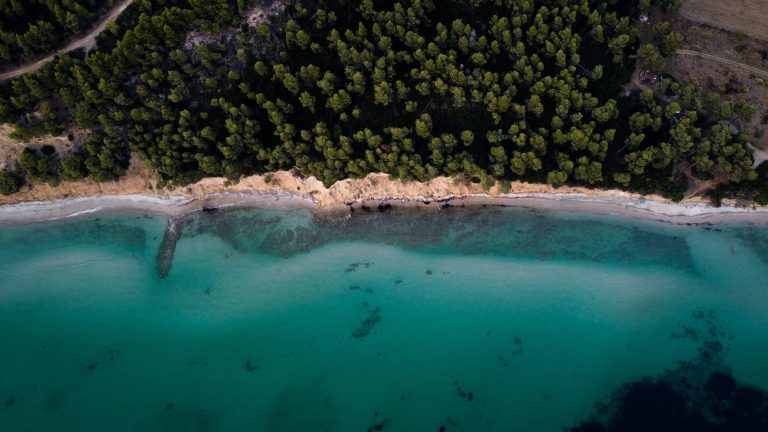
The beaches are the main reason many German-speaking guests love Halkidiki. The clear water, pine backdrop and family-friendly atmosphere feel familiar to many who know the Adriatic or Croatian coast, but with a few Greek twists.
Organised beaches vs quiet coves
On Kassandra and Sithonia you will find a mix of:
- Organised beaches with beach bars, sunbeds, umbrellas, music and waiter service
- Quieter stretches where you bring your own umbrella and towel
Places like Afitos Beach under the village of Afytos, parts of Neos Marmaras beach, and the area around Porto Carras Marina are very organised in high season. By contrast, smaller spots such as Agia Kiriaki Beach near Neos Marmaras or some coves around Tripiti Beach can feel much calmer and more “natural”.
[picketinhub_list_all]
Sunbeds, minimum spend and reservations
Many organised beach bars in Halkidiki do not charge a fixed price for sunbeds; instead they expect a minimum consumption per set of sunbeds, for example drinks and snacks. This is different from many German lakeside beaches or pools, where you simply pay an entry fee.
- Ask politely at the bar: “What is the minimum for two sunbeds?”
- In July and August, locals often reserve sunbeds by phone, especially weekends.
- Arrive earlier (before 11:00) for the front row with sea views in popular spots.
Dress codes and behaviour on the beach
Compared with some more conservative destinations, Greek beach culture is relaxed but not extreme. A few practical notes for German-speaking guests:
- Topless sunbathing is usually tolerated on quieter parts of the beach, less so directly in front of family beach bars.
- Beachwear is fine at the beach bar, but in most tavernas, especially in villages like Afytos or Ouranoupoli, it is respectful to put on a T-shirt or dress.
- Loud music from portable speakers is not appreciated on quieter beaches; Greeks enjoy their music, but usually via the bar’s sound system.
Season, water temperature and crowds
The main beach season runs from late May to late September. For German-speaking guests, this means:
- June: Warm but not too hot, fewer crowds, good for couples and nature lovers.
- July–August: Hottest months, busiest beaches, especially on Kassandra and around Neos Marmaras.
- September: Sea is at its warmest, families with young children and older travellers love this period.
Water clarity is one of Halkidiki’s strongest points. On calm days, especially on Sithonia and the Athos Coast near Ouranoupoli, visibility is excellent – ideal if you enjoy snorkelling.
Sea and outdoor activities depend on weather and your own fitness level. Always follow local safety advice and skipper instructions.Driving in Halkidiki: what feels familiar, what does not
If you are used to driving on the Autobahn or Swiss mountain roads, Halkidiki will feel both easy and slightly chaotic. Distances are manageable, but local habits are different.
Road types and conditions
The main routes from Thessaloniki to Halkidiki and along the Kassandra and Sithonia peninsulas are asphalted and generally in good condition. Once you leave the main roads, expect:
- Narrower village streets, especially in traditional places like Afytos or Poligiros
- Occasional potholes and speed bumps near resorts
- Unpaved tracks leading to some remote beaches and viewpoints
Local driving style
Many German-speaking guests comment that driving here feels less disciplined than at home. A few common observations:
- Some locals will overtake in places you would not choose yourself – stay calm and keep right.
- Use of indicators is, let us say, “creative”. Always double-check before turning.
- Parking is often improvised, especially near popular beaches in high season.
Despite these quirks, serious accidents are not the norm if you drive defensively and avoid high speeds.
Parking at the beach and in villages
Parking is usually free but not always perfectly organised. Typical situations:
- At organised beaches: You may find a dirt parking area next to the beach bar, sometimes managed by staff who guide you to a spot.
- In villages like Afytos or Neos Marmaras: Look for signed municipal car parks slightly above the centre and walk down.
- Near hidden coves: You may park along the roadside – leave enough space for other cars and emergency vehicles.
Renting a car: documents and realistic driving times
To rent a car, you will need a valid driving licence and usually a credit card. For German, Austrian and Swiss licences, no international licence is normally required, but check with your rental company before you travel.
Typical driving times (without heavy traffic):
- Thessaloniki Airport to Kassandra (Afytos area): about 1 hour
- Thessaloniki Airport to Neos Marmaras (Sithonia): about 1 hour 40 minutes
- Neos Marmaras to Ouranoupoli (Athos Coast): about 1 hour 30 minutes
In July and August, add extra time for weekend traffic and slowdowns near popular turns to the beaches.
Food culture: what German-speaking guests usually love
Food is one of the highlights of any trip to Halkidiki, and here our German-speaking guests usually feel more “at home” than they expected. Portions are generous, ingredients are fresh, and the style is relaxed rather than formal.
What feels familiar on the menu
Many tavernas offer dishes that match German-speaking tastes:
- Grilled meats – souvlaki, pork chops, chicken skewers, bifteki (minced meat patties)
- Fresh fish and seafood – grilled sea bream, sardines, calamari, mussels
- Simple salads – Greek salad, cabbage & carrot salad, beetroot salad
- Oven dishes – moussaka, stuffed vegetables, pastitsio (especially in family tavernas)
Portions are typically larger than in many central European restaurants, so sharing is absolutely normal.
Meze style and sharing plates
One cultural difference is the way Greeks like to eat together. Rather than each guest ordering a separate starter and main course, it is common to:
- Order several meze (small dishes) for the table
- Add a couple of main dishes to share
- Place everything in the middle and taste a bit of everything
If you are used to very individual plates, this can feel unfamiliar at first, but most German-speaking guests quickly enjoy the relaxed, social atmosphere it creates.
Vegetarian and lighter options
Even in traditional tavernas, you will find plenty of vegetable-based dishes:
- Grilled vegetables and stuffed peppers
- Gemista (rice-stuffed tomatoes and peppers)
- Giant beans in tomato sauce (gigantes)
- Local cheeses and yoghurt-based dips
Vegan choices require a bit more attention, but many side dishes are naturally plant-based. Ask for recommendations; staff are usually happy to explain ingredients.
Where to eat in different parts of Halkidiki
Each peninsula has its own food character. On Sithonia, seaside tavernas near Neos Marmaras, Agia Kiriaki and around Porto Carras Marina are ideal for fish and seafood, and you can plan your meals around the beaches you are visiting. [food_sithonia]
On Kassandra, places like Afytos, Nea Fokea and Loutra (near the Thermal Spa Agia Paraskevi) mix traditional Greek food with more modern, Mediterranean-style menus. [food_kassandra]
Inland, villages like Poligiros offer more “everyday Greek” dishes, grilled meats and simple local wines – a nice contrast if you want to see life beyond the coastline.
Culture, history and familiar European heritage
Many German-speaking guests appreciate that Halkidiki is not only about beaches. There is a strong sense of European history and culture, from ancient Greece to the Byzantine era.
Archaeological sites and museums
A visit to the archaeological site of Olynthus on the Halkidiki mainland is a good way to connect your beach holiday with classical history. The ruins of the ancient city and its mosaic floors give a tangible sense of everyday life in ancient Greece, and the site is rarely crowded compared with more famous spots in southern Greece.
For a broader cultural day, many guests combine Halkidiki with a visit to Thessaloniki. Walking along the seafront from the White Tower to Aristotelous Square, you will notice how the city feels both Balkan and European at the same time. The city’s museums and churches are well described on the official Thessaloniki tourism website.
[archeological_map]
Religious and monastic heritage
The Athos Coast, with Ouranoupoli as the gateway to Mount Athos, offers a different kind of cultural experience. Even if you do not visit the monasteries themselves (which is only possible for men with a special permit), a boat trip along the coast gives a strong impression of the monastic republic’s architecture and landscape.
For German-speaking guests interested in religion, history or architecture, this combination of beach holiday and spiritual heritage feels very special – and rather different from many other Mediterranean destinations.
Nature and hiking
Halkidiki’s pine forests and hills invite gentle walks rather than extreme alpine hiking. Expect:
- Shaded tracks above beaches on Sithonia with sea views
- Olive groves and rural paths around Poligiros and central Halkidiki
- Short viewpoints accessible by car and a short walk, especially on Kassandra and Sithonia ridges
Always carry water, wear proper shoes and keep an eye on the heat, especially in July and August. Sea and outdoor activities depend on weather and your own fitness level. Always follow local safety advice and skipper instructions.
Sailing, boat trips and diving – popular with German-speaking guests
Guests from Germany, Austria and Switzerland often enjoy being on the water, whether on lakes at home or on the Aegean here. In Halkidiki, sailing and boat trips are a very natural extension of that passion.
Exploring the coast by boat
From marinas like Porto Carras near Neos Marmaras or smaller harbours around Sithonia and Kassandra, you can join organised day trips or private charters. It is one of the best ways to discover quieter bays between Sithonia and the Athos Coast, where the water is exceptionally clear and the coastline still feels wild.
For inspiration and planning, you can look at yacht and sailing options via yachts.holiday, which gives a good sense of what is possible around Halkidiki and the nearby islands. If you’d like to explore the coast, ask us about day trips at sea and sailing boat options.
Diving and snorkelling
The underwater world around Halkidiki is not the Red Sea, but visibility is often excellent and there are interesting rock formations and marine life, especially off Sithonia and the Athos Coast. Beginner-friendly diving schools and snorkelling trips operate from several points along the coast.
If you want a more structured diving experience, portoscuba.com is a useful reference for understanding local dive spots, courses and safety standards in the region.
What feels different from home: rhythm of the day and social habits
Beyond beaches, driving and food, the daily rhythm in Halkidiki is often the biggest adjustment for German-speaking guests.
Meal times and opening hours
Many tavernas are quiet at 18:00 and come alive around 20:30–21:00, especially in July and August. Locals eat late; if you arrive at 19:00 you will usually find a table without reservation, but the atmosphere will be calmer.
Small shops may close for a few hours in the early afternoon, particularly inland or outside high season. Supermarkets in main resorts, however, tend to stay open continuously during the day in summer. Always check current details locally or via official municipal websites. Timetables, opening hours and routes can change without notice. Always double-check locally before you travel.
Noise levels and nightlife
Compared with quieter parts of rural Germany or Switzerland, Greek resorts can feel noisier in high season:
- Beach bars may play music until late, especially on Kassandra.
- Village squares and promenades remain lively until midnight or later.
- Inland villages like Poligiros are calmer at night, but local festivals (panigyria) can be loud on specific dates.
If you prefer very quiet nights, choose accommodation set slightly back from the main roads and beach bars, or consider more relaxed areas of Sithonia or the Athos Coast.
[random_authority_text]
Frequently asked questions from German-speaking guests
Is Halkidiki suitable for families with children?
Yes, absolutely. Many beaches are shallow with gentle entry, especially on Kassandra and parts of Sithonia, and water temperatures are comfortable from June to September. Family-friendly areas include Afytos and other Kassandra resorts, Neos Marmaras (with its mix of town and beach) and the calmer Athos Coast near Ouranoupoli and Tripiti Beach.
Do people speak German in Halkidiki?
English is more widely spoken than German, but in many hotels and larger resorts you will meet staff who understand at least basic German, especially on Kassandra and in popular Sithonia areas. Menus are often available in German in touristy tavernas. However, a few words of English – or even Greek – will make communication easier and friendlier.
Is tap water safe to drink?
Tap water is officially potable in most of Halkidiki, but many locals and visitors prefer bottled water because of taste and varying mineral content. Using tap water for brushing teeth and making coffee is normal; for drinking, you can decide based on taste and local advice.
How hot does it really get in summer?
Expect daytime temperatures in the high 20s to mid-30s Celsius in July and August, with cooler evenings by the sea. Compared with some very hot regions, the sea breeze helps, but midday sun is still strong. Use good sun protection, drink plenty of water and plan more active excursions – such as visiting Olynthus or Poligiros – in the morning or late afternoon.
For up-to-date climate and weather information, you can check the official Greek weather service or other national meteorological sites.
Is Halkidiki expensive compared with other Greek regions?
Halkidiki offers a wide range of options. In general:
- Accommodation: from simple studios to high-end resorts, with prices rising in July–August.
- Food: eating in a local taverna is often better value than in very touristy seafront places.
- Activities: boat trips, spa visits at places like Thermal Spa Agia Paraskevi, and cultural excursions add to your budget but are usually good value compared with many Western European destinations.
How does Halkidiki compare with islands like Crete or Rhodes?
Many German-speaking guests describe Halkidiki as feeling more “local” and less mass-touristic than some big islands, especially outside the peak weeks in August. The combination of pine forests, sandy beaches and easy access to a real city (Thessaloniki) is a strong plus. On the other hand, there are fewer all-inclusive mega-resorts than on some islands, which many visitors see as an advantage.
Planning your trip with local expertise
As a team based between Thessaloniki and Halkidiki, we have walked these beaches, driven these roads and eaten in these tavernas for more than two decades. That local experience is what Our local team of skippers, travel agents and scuba instructors with over 20 years of experience in Halkidiki is here to help you. and Halkidiki.info – travel guide for Sithonia, Kassandra & Mount Athos are built on: helping different types of guests find the corners of Halkidiki that suit them best.
If you are still deciding between Kassandra, Sithonia and the Athos Coast, or you are comparing your needs with what we recommend for other regions such as the Middle East & Caucasus, feel free to use this article as a base and then fine-tune according to your travel style. Not sure where to start? Contact our local travel agency for friendly, personalised advice, seasonal offers and travel options.
Want the full picture? Read our in-depth Halkidiki travel guide before you book.
Who Halkidiki suits best among German-speaking guests
From our experience, Halkidiki works particularly well for:
- Families with children: Safe, shallow beaches, relaxed tavernas, and plenty of self-catering options.
- Couples: Romantic sunsets in Afytos, quiet coves on Sithonia, wine and seafood evenings by the sea.
- Nature lovers: Forested hills, clear waters for snorkelling, peaceful corners even in high season if you know where to look.
- Older travellers: Especially in May–June and September–October, when temperatures are softer and beaches quieter.
- Small groups of friends: For a mix of relaxed beach days, sailing, and evenings in lively places like Neos Marmaras or Kassandra resorts.
Whether you are looking for something that feels close to home or a gentle step outside your usual comfort zone, Halkidiki offers both – familiar European comfort and very Greek ways of enjoying the sea, food and slow evenings.