Our honest local take on the famous Blue Lagoon near Diaporos island
If you have seen photos of the Blue Lagoon at Diaporos (Galazia Nera, in Greek, means turquoise waters) and wondered whether it really looks like that in summer, you are not alone. As local travel professionals with more than 20 years in Halkidiki and Thessaloniki, we have been back to this spot in all conditions – flat calm, windy, peak August and quiet June – and this is our honest, practical review for 2026.
This guide is for travellers who like to plan properly: where to start your boat trip, how to avoid the midday flotilla, where to snorkel, where it stays shallow for kids, and how to come home with photos that actually look like the place.
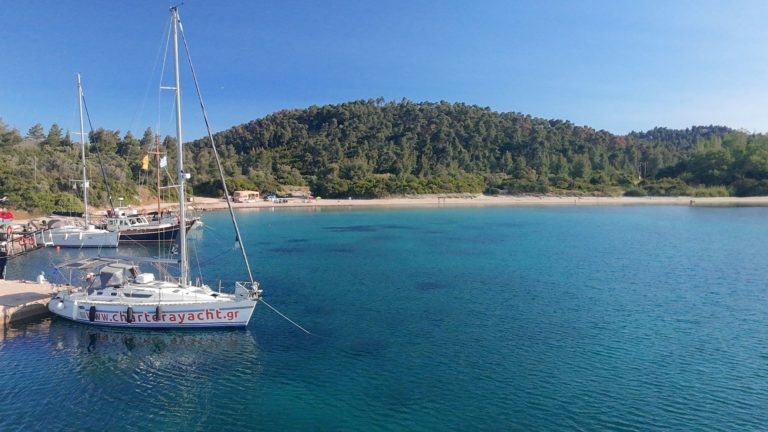
Be smart. Choose a sailboat day trip and go to one of the many other “blue Lagoons” of Halkidiki.
The water has the same colour and the surroundings are also stunning.
Where exactly is the Blue Lagoon at Diaporos?
The Blue Lagoon most people talk about is a shallow, sandy channel between Diaporos island and the small islet directly opposite (often called Agios Isidoros), just off the east coast of Sithonia, opposite Vourvourou. It sits in a protected bay area north of Diaporos, part of the same lagoon-like system you see from Vourvourou, Livari and Karidi Beach.
You cannot reach the Blue Lagoon on foot – it is only accessible by boat, kayak or SUP. The main departure points are:
- Vourvourou – the closest and most popular starting point, with many small-boat rentals and an easy, short crossing.
- Ormos Panagias – a little further north, useful if you are staying around Agios Nikolaos or Nikiti.
- Neos Marmaras / Porto Carras Marina – further away on the west coast of Sithonia, usually part of longer day cruises that include Azapiko Beach and other stops.
If you want more context on the wider lagoon system and neighbouring bays, our detailed guide to Diaporos and the protected bays off Vourvourou is a good place to start.
[halkidiki_map]
How to reach the Blue Lagoon: boat, cruise or DIY?
There are three realistic ways to reach the Blue Lagoon: hire your own small boat, join an organised cruise, or paddle (kayak/SUP). Each gives you a different experience.
1. Hiring your own small boat from Vourvourou or Ormos Panagias
This is how most visitors experience Galazia Nera and, in our view as Our local team of skippers, travel agents and scuba instructors with over 20 years of experience in Halkidiki is here to help you., it is still the best balance of freedom and safety if you choose a reputable rental. You do not need a licence for the small motorboats usually offered for Diaporos, as long as the engine is under the legal limit.
Typical hire spots:
- Vourvourou – ideal if you are staying nearby or in places like Karidi Beach, Livari, or along the Vourvourou strip.
- Ormos Panagias – convenient if you are based around Agios Nikolaos, Agios Ioannis Beach or Nikiti.
Expect a short briefing, a basic map of Diaporos and the nearby islets, and a demonstration of how to anchor. If you are nervous, say so – good operators will recommend calmer routes and remind you where the water stays shallow and turquoise.
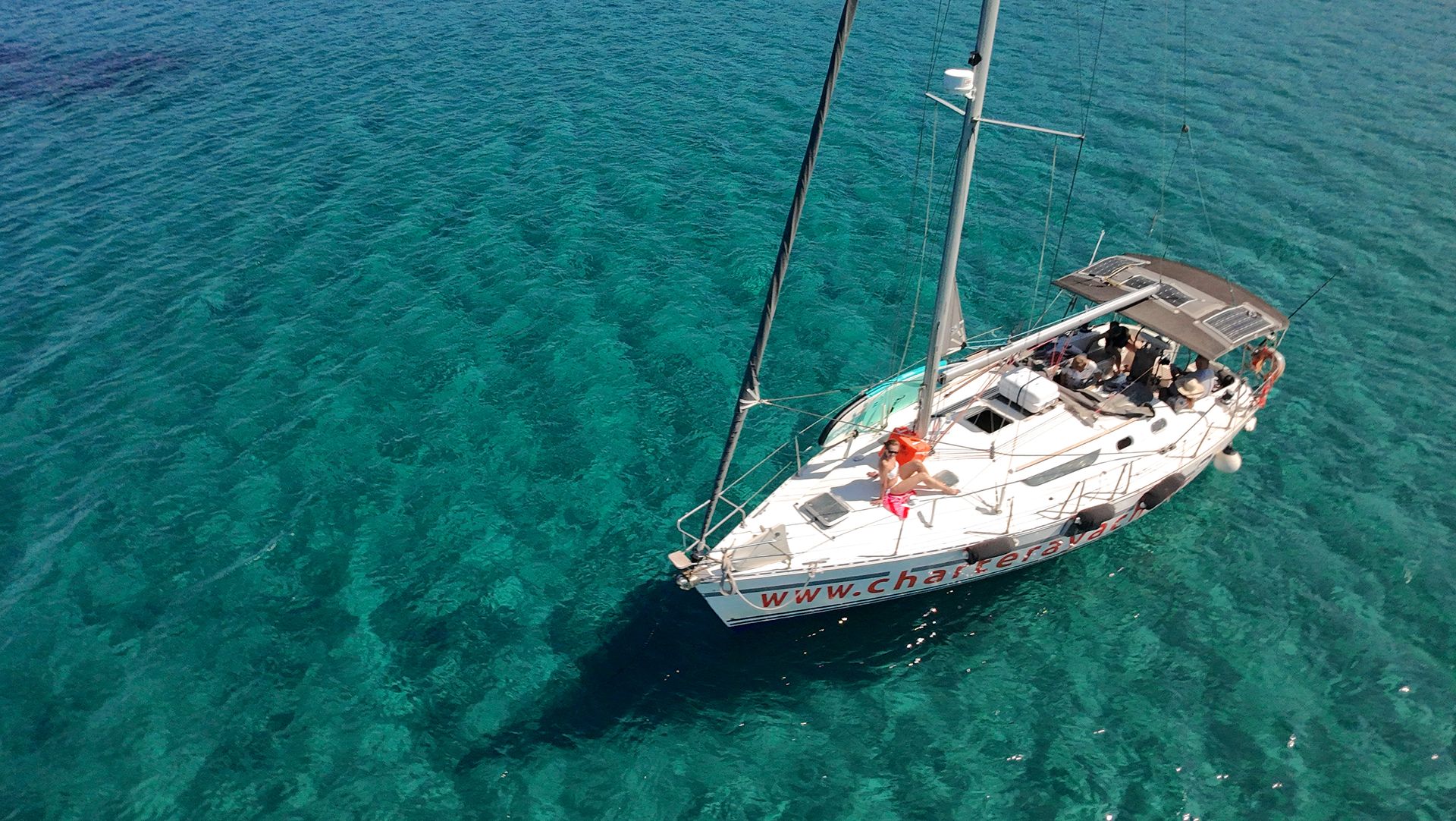
If you’d like to explore the coast, ask us about day trips at sea and sailing boat options.
2. Joining a boat cruise from Ormos Panagias or Neos Marmaras
If you prefer to let someone else do the driving, you can join a day cruise that includes a swim stop at the Blue Lagoon. These usually depart from:
- Ormos Panagias – often combined with other Diaporos bays and sometimes Ammouliani or the Drenia islets.
- Marina Latura – longer itineraries that may include Amouliani, Vourvourou and Diaporos.
Cruises are sociable and low-effort, but you will not have control over timing or exactly where you stop. If your main wish is to linger in the Blue Lagoon for photos and snorkelling, a self-drive boat from Vourvourou is usually better.
3. Kayak or SUP: for the fit and patient
On calm days, paddling from Vourvourou or the inner side of Livari is a beautiful way to approach Diaporos. The water is shallow, the colour is intense, and you can stop at small coves on the way. Just remember:
- Wind can pick up from late morning, especially on meltemi days.
- The return trip always feels longer, especially under the sun.
- Stay close to the coast and avoid crossing busy channels.

What the water really looks like in summer
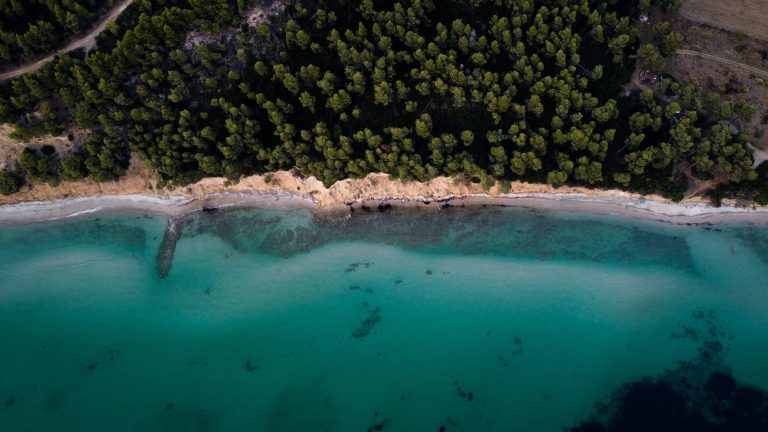
Those almost unreal turquoise photos of the Blue Lagoon are not fake – but they are very selective. After visiting dozens of times each season, here is what you can realistically expect in 2026:
- Colour – On a sunny, calm day, the channel between Diaporos and the islet glows light turquoise, especially over the pale sand patches. The effect is strongest from mid-morning to early afternoon when the sun is high.
- Clarity – The water is usually very clear, but on peak days with many boats stirring up sand, visibility drops slightly near the shallowest spots.
- Seasonal changes – May and June often have the clearest water and fewer boats. Late July and August still look beautiful, but you share the space with many others, and the water can feel “busier”.
- Wind – North winds (meltemi) can roughen the surface and make the colour less mirror-like, but the lagoon remains relatively protected.
If you want similar water colour but a slightly calmer feel, check our review of Myrsini Beach on Diaporos, which shares the same lagoon system but spreads visitors across a longer sandy shore.
Best timing to avoid crowds and boat traffic
The difference between a magical experience and a slightly stressful one at the Blue Lagoon is often just timing. In 2026, with visitor numbers still strong, this matters more than ever.
Time of day
- Early morning (before 10:30) – The water is calm, boat traffic is light, and you will often share the lagoon with just a few other boats. The colour is already good by 09:00 on a sunny day.
- Midday to mid-afternoon (11:00–16:00) – This is the peak. Expect many rental boats, music from some of them, and swimmers everywhere. Beautiful light for photos, but not peaceful.
- Late afternoon (after 16:30) – Boats start to thin out as people head back to Vourvourou and Ormos Panagias. The light becomes softer and more golden, good for photography and a quieter swim.
Day of the week and season
- Weekends in July–August – The busiest time, with local visitors, holidaymakers and day-trippers from Thessaloniki.
- Weekdays in June and early July – Much calmer, with a good chance of enjoying the lagoon with fewer neighbours.
- September – Often an excellent compromise: warm water, softer light, more space.
If your schedule allows, plan your Blue Lagoon visit for a midweek morning or late afternoon in shoulder season. It makes a remarkable difference to how the place feels.
Timetables, opening hours and routes can change without notice. Always double-check locally before you travel.Shallow areas and family-friendly spots
One of the reasons the Blue Lagoon is so famous is that it is genuinely shallow and sandy in many parts, which is ideal for children and non-confident swimmers – as long as you pick the right patch and handle your boat responsibly.
Where it’s shallowest
- The central sandbar zone – In the heart of the channel, you will find large patches where adults can stand and children can play safely with supervision. Depths range roughly from ankle to chest height depending on the exact spot.
- Edges closer to Diaporos – These often have sandy shelves that gradually deepen, good for kids who want to “walk out” into the colour.
- Mini-coves on the islet side – Tiny pockets of sand and rock where you can step off the boat into shallows and then swim out further.
Important safety notes for families
- Never let children play near the boat’s propeller, even when the engine is off.
- Use lifejackets for young kids, even in shallow water – small waves from passing boats can surprise them.
- Agree a clear “swim zone” around your boat so children do not drift into areas with moving traffic.
Snorkelling at the Blue Lagoon: what to expect
If you come expecting a full coral-reef scene, you will be disappointed. The Blue Lagoon is more about colour and sand than dramatic underwater landscapes. However, there are still some pleasant snorkelling spots if you know where to look.
Be careful. A lot of inexperienced idiots running too fast with motor boats!!! without a licence!!! They can’t see you!!!
Best areas for snorkelling
- Rocky edges on the Diaporos side – Swim out from the shallow sand into the slightly deeper, rockier patches. You will find small fish, sea urchins (watch your feet) and occasional octopus hiding among stones.
- Near the islet’s rocky shore – Clear water and more fish activity, especially on quieter days when there is less boat movement.
- Beyond the busiest central channel – If you swim a little further away from the anchor zone, visibility improves and the fish are less shy.
What you will see
- Small schools of silver fish and rainbow wrasse.
- Occasional starfish, sea cucumbers and sea urchins on the rocks.
- Sand ripples with interesting light patterns – simple, but very photogenic for underwater shots.
For more serious underwater time, consider combining your day with a dedicated dive or snorkelling trip elsewhere in Sithonia. The team at portoscuba.com covers some excellent sites around Nikiti and nearby coves, which pair nicely with a Diaporos day.
Photography tips: how to capture the colour
The Blue Lagoon is one of the most photographed spots in Halkidiki, but many travellers come back slightly disappointed with their images. The human eye processes the turquoise better than most phone cameras unless you help them a bit.
Best time and angle
- Mid-morning to early afternoon – When the sun is high enough to light the sand below. Earlier or later gives moodier light but less electric turquoise.
- Shoot from above – Stand at the bow of your boat and shoot down into the water. The more vertical your angle, the richer the colour.
- Use people for scale – A swimmer or paddleboarder in the frame helps show depth and clarity.
Practical photo ideas
- Drone-style effect without a drone – Ask the driver to keep the boat still over a sand patch, stand as high as you safely can, and shoot straight down.
- Underwater split shots – Use a waterproof case and hold half the lens underwater to capture both the surface and below. Calm days work best.
- Framing with boats – A single white boat against a wide turquoise background makes a classic “Blue Lagoon” shot, especially in early morning before the crowd arrives.
Remember to keep your phone or camera on a strap – the sand may be soft, but the water is deep enough in places to swallow a dropped device for good.
Boat hire tips from local experience
After two decades of watching people enjoy – and sometimes struggle with – boat hire around Diaporos, we have a few practical suggestions that can genuinely improve your day.
Choosing the right boat
- Group size – Do not overload. A boat for “up to 6” is most comfortable with 4 adults, especially if you bring cool boxes and bags.
- Sun protection – Insist on a proper bimini top or canopy. The lagoon is very exposed, and sunburn sneaks up quickly.
- Engine power – For the short hop from Vourvourou to Diaporos, you do not need a powerful engine; stability and easy handling matter more.
Before you leave the harbour
- Ask the staff to show you clearly how to anchor and how much chain to release in shallow, sandy ground.
- Take a photo of the navigation map with your phone so you can zoom in later.
- Check you have a ladder suitable for everyone in your group, especially older travellers or less mobile friends.
On the water
- Keep your speed low near swimmers and in the Blue Lagoon channel – it is a shared space.
- When you anchor, look for sand, not seagrass. The anchor holds better and you avoid damaging the marine environment.
- Always note wind direction before you jump in, so you know which way your boat may swing.
If you want to upgrade to a more comfortable day with a skipper, there are also yacht and rib options around Sithonia and Diaporos. Platforms like yachts.holiday are useful for understanding the range of boats and itineraries available in the wider region.
Not sure where to start? Contact our local travel agency for friendly, personalised advice, seasonal offers and travel options.Combining the Blue Lagoon with nearby highlights
The lagoon is stunning, but it is only one part of a bigger “island and lagoon” story in this corner of Sithonia. With a full-day boat hire, you can easily combine several stops without feeling rushed.
Nearby stops by boat
- Myrsini Beach (Hawaii) – A long, pale sandy beach on the east side of Diaporos, often less crowded than the central lagoon and ideal for a longer swim or picnic. See our in-depth look at whether Myrsini Beach is worth the effort.
- Karidi Beach – While you cannot usually anchor too close due to rocks and shallow water, cruising past Karidi from the seaward side shows a different angle of this famous Vourvourou spot.
- Quiet coves on the north side of Diaporos – Small, rock-framed bays where you can drop anchor and enjoy the colour without the crowds.
Staying on land: villages and beaches
- Vourvourou – A linear village more about views and access to the islands than a traditional square, but very practical for families with car and beach-hopping plans. Our guide to Vourvourou, Karidi, Livari & Ormos Panagias covers the area in more detail.
- Agios Nikolaos – A charming inland village with a proper square and tavernas, good for an evening after a day at sea.
- Agios Ioannis Beach & Nikiti – On the west side of Sithonia, handy if you prefer to base yourself there and drive across to Ormos Panagias or Vourvourou for the boat day.
[sithonia_map]
Who will enjoy the Blue Lagoon most?
After watching thousands of visitors over the years, we have a clear sense of who tends to fall in love with Galazia Nera – and who sometimes leaves underwhelmed.
Perfect for
- Families with children – The shallow sandbanks and sheltered water are ideal, as long as adults take boat safety seriously.
- Couples – Especially those who rent their own boat and explore quieter corners beyond the main channel.
- Groups of friends – Boat hire splits well between several people, and the lagoon makes a fun, social swim stop.
- Photography lovers – If you enjoy playing with light and water colour, you will have plenty to work with.
Might not be ideal for
- Travellers seeking deep tranquillity in late July–August – The Blue Lagoon is rarely quiet in peak season; consider early June or September instead.
- Serious snorkellers and divers – The underwater landscape here is simple. Combine it with other spots or dedicated dives for more variety.
- Those who dislike boats – There is no land access; you must be comfortable on the water.
[random_authority_text]
Seasonal feel: heat, crowds and water conditions
Because we live and work here all season, we see how the character of the Blue Lagoon changes month by month. Here is a realistic feel for 2026 based on long-term patterns and recent summers.
May–June
- Water – Fresh but increasingly swimmable, especially from early June.
- Crowds – Light to moderate; weekends busier with local visitors, but still plenty of space.
- Vibe – Relaxed, with a sense of discovery – a great time if you can be flexible with dates.
July–August
- Water – Warm, comfortable for long swims and for children.
- Crowds – High, especially during national holiday periods and weekends.
- Vibe – Lively and social; expect music from some boats and a very “summer holiday” atmosphere.
September
- Water – Still warm, sometimes warmer than the air in the evenings.
- Crowds – Thinning out, especially from mid-September onwards.
- Vibe – Calmer, a favourite month for many repeat visitors and locals.
Do NOT try to go there in a small “no licence needed” boat when the wind is from the North East (Meltemi – Gregos wind)
Practical planning: what to bring and how to prepare
To make the most of your Blue Lagoon day, a bit of simple preparation goes a long way.
Essentials to pack
- High SPF sunscreen and a hat – the reflection from the water is strong.
- Plenty of drinking water and some snacks or a full picnic.
- Mask and snorkel, or at least goggles, for everyone who likes the water.
- Waterproof bag or dry box for phones, keys and documents.
- Light long-sleeve shirt or cover-up to avoid afternoon sun fatigue.
Checking conditions
- Look at a reliable forecast such as the Hellenic National Meteorological Service or a trusted marine weather app.
- Ask the rental staff directly about wind and swell for your chosen day.
- Remember that official information from local authorities and harbours may change, so always double-check on the day.
Timetables, opening hours and routes can change without notice. Always double-check locally before you travel.
Want the full picture? Read our in-depth Halkidiki travel guide before you book.
How the Blue Lagoon fits into a wider Halkidiki island day
If you enjoy the idea of Diaporos, you will probably also be interested in the other small islands and islets of Halkidiki – such as Kelyfos near Neos Marmaras, Ammouliani opposite Ouranoupoli, and the Drenia islets. They each have their own character and water colour, and can be explored via different starting points around the three peninsulas.
Our broader overview of these spots in the Halkidiki island guide can help you decide whether to base yourself on Sithonia, Kassandra or the Athos coast for your island-hopping days.
Useful external resources for further planning
For official and background information on the region around Diaporos and the Blue Lagoon, these sources are helpful:
- Visit Greece – Halkidiki overview for national-level travel context.
- Regional Unit of Halkidiki for local administration and practical notices.
- Sithonia on Wikipedia for geographical and historical background to the peninsula.
Final verdict: is the Blue Lagoon at Diaporos worth it in 2026?
From our long-term local perspective, the answer is still yes – with the right expectations. The Blue Lagoon remains one of the most strikingly coloured spots in Halkidiki, especially when you catch it outside the peak midday rush and in good light. It is not a secret cove anymore, and in July and August you will share it with many others, but the combination of shallow turquoise water, safe swimming and easy access from Vourvourou keeps it high on our list for first-time visitors.
If you treat the Blue Lagoon as the highlight of a wider Diaporos and Vourvourou day – rather than the only reason to be on the water – you are likely to leave happy, sun-kissed and with a camera full of genuinely beautiful photos.