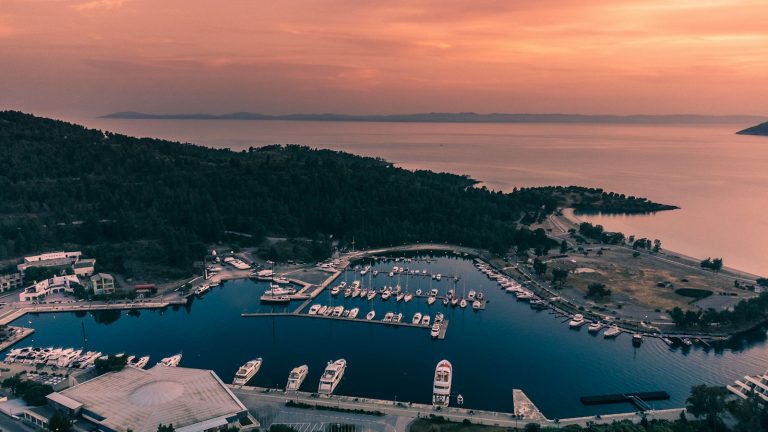
Understanding Halkidiki’s geography – why this beautiful place is not actually an island
If you have ever looked at a map and thought Halkidiki was a North Aegean island, you are definitely not alone. From the beach, it often feels like you are on an island – but in reality, you are on a peninsula firmly attached to mainland Greece. As local travel planners at Halkidiki.info – travel guide for Sithonia, Kassandra & Mount Athos with over 20 years of experience exploring every corner of Halkidiki and Thessaloniki, we will walk you through the geography in simple terms so your first visit in 2026 is easy to understand and plan.
So, is Halkidiki a North Aegean island?
No – Halkidiki is not an island at all. It is a large peninsula in Central Macedonia, northern Greece, sticking out into the Aegean Sea like a three-fingered hand. Those three “fingers” are smaller peninsulas:
- Kassandra – the western “first finger”
- Sithonia – the middle “second finger”
- Mount Athos (Athos Peninsula) – the eastern “third finger”
All three are connected to the mainland by land bridges (isthmuses), so you can drive to them without taking any ferry. The wider region of Halkidiki is part of the Greek mainland region of Central Macedonia, along with Thessaloniki.
Where Halkidiki sits on the map – simple picture in your head
If you imagine northern Greece from west to east:
- Thessaloniki is the main city, sitting on a big bay.
- South-east of Thessaloniki lies the wider Halkidiki peninsula, jutting into the Aegean Sea.
- From north to south, the land narrows and splits into the three smaller peninsulas: Kassandra, Sithonia and Athos.
Key points that help visualise it:
- Nea Moudania – a busy town on the “root” of Halkidiki, clearly on the mainland.
- Ancient Potidaea at Nea Potidea – where a very narrow strip of land (with a canal) links Kassandra to the rest of Halkidiki.
- Afytos and Nea Skioni – on Kassandra, looking and feeling “island-like” but still attached by road.
- Neos Marmaras – on Sithonia’s west coast, facing islets and bays that give a strong island mood.
- Ouranoupoli – on the Athos coast, the last village before the Mount Athos border.
Because so much of Halkidiki is surrounded by sea, it is very easy to think of it as an island, but every one of these places is reachable by road from Thessaloniki without any boat.
[halkidiki_map]
Why so many visitors think Halkidiki is an island
As Our local team of skippers, travel agents and scuba instructors with over 20 years of experience in Halkidiki is here to help you. based between Thessaloniki and Halkidiki, we hear “which island is Halkidiki on?” almost every week. There are a few reasons for this confusion:
- Marketing language – travel brochures often call Halkidiki “Halkidiki Island” because it sounds romantic and simple for people who do not know Greek geography.
- Island-style beaches and coves – long stretches of sand, pine trees right to the water, and turquoise bays look very similar to the Cyclades or Sporades.
- Three narrow peninsulas – when you are staying on one of the “fingers”, you are surrounded by water on three sides, so it feels like an island.
- Nearby real islands – places like Ammouliani, Diaporos or Kelyfos are genuine islands just off the coast. Many visitors remember the island but forget the mainland base.
- Mount Athos mystique – the monastic peninsula is sometimes described as “the Holy Mountain island”, which adds to the confusion.
If you are trying to decide between Halkidiki and the Greek islands for your holiday, it helps to read something that sets them side by side – our guide on how Halkidiki compares with the Greek islands for a beach holiday (https://halkidiki.info/en/holiday-planning/vs-greek-islands/) is a good starting point.
Understanding the three peninsulas: Kassandra, Sithonia and Athos
Let’s break down the three “fingers” of Halkidiki so you can see how they differ and why none of them are islands.
Kassandra – lively, family-friendly and closest to Thessaloniki
Kassandra is the westernmost peninsula and the first one you reach when driving from Thessaloniki. It is linked to the mainland by the narrow strip at Ancient Potidaea, where the Potidea Canal cuts through the neck of land but is still spanned by road bridges.
Typical feel:
- Who it suits – families, groups of friends, first-time visitors who want convenience, nightlife and easy driving.
- Highlights – the stone village of Afytos on the clifftop, long sandy beaches around Hanioti, Polichrono, Pefkochori and the quieter west coast near Nea Skioni.
- Vibe – busier in July–August, lots of beach bars and organised stretches, but still with quieter corners if you drive a bit.
From a geography point of view, Kassandra shows clearly that Halkidiki is a peninsula: you actually drive across the isthmus at Nea Potidea, where you can see sea on both sides but you are still on continuous land.
Sithonia – wild coves, pine forests and an “island spirit”
Sithonia, the middle peninsula, is where many nature lovers and repeat visitors end up. It feels more rugged and less built-up than Kassandra, with a ring road that hugs the coastline and reveals one hidden cove after another.
Typical feel:
- Who it suits – couples, road-trippers, campers, snorkellers and anyone who does not mind a bit of driving for a perfect beach.
- Highlights – the seaside town of Neos Marmaras, the bays around Vourvourou, pine-covered hills, and clear water that is excellent for swimming and snorkelling.
- Vibe – quieter than Kassandra at night, more spread-out accommodation, a mix of small resorts and simple rooms.
Because the sea wraps closely around Sithonia and you see small islets just offshore, many visitors are convinced they are on an island. But again, you drive into Sithonia from the mainland near Nikiti – no ferry, no bridge tolls, just a continuous road.
Mount Athos and the Athos coast – a separate world, still not an island
Mount Athos (the Athos Peninsula) is the eastern “finger” of Halkidiki. It is an autonomous monastic state within Greece, home to historic monasteries such as Vatopedi, clinging to steep slopes that plunge into the sea.
Key things to know:
- Geography – Athos is a peninsula, attached to the rest of Halkidiki by land.
- Access – entry is strictly controlled; only men with a special permit may visit the monasteries on land.
- For most travellers – the usual way to see Mount Athos is by boat cruise from Ouranoupoli, sailing along the coast and viewing the monasteries from the sea.
If you are curious about the stories behind this unique place, we have a dedicated article on the history, myths and sea-only views of Mount Athos (https://halkidiki.info/en/culture-nature-history/mount-athos-monasteries-history-myths/).
Just north of the Mount Athos border, the Athos coast around Ouranoupoli, Tripiti and Ammouliani’s ferry port is part of normal Halkidiki – accessible by road, suitable for families and couples, and a good base if you want a quieter, more spiritual atmosphere without entering Athos itself.
Nearby islands that cause confusion – Ammouliani, Diaporos, Kelyfos and more
Although Halkidiki itself is not an island, there are several small islands and islets very close to its shores that you can visit by boat. This is one of the reasons people end up thinking of Halkidiki as “an island area”. Our full island guide goes into more depth (https://halkidiki.info/en/regions/islands-guide-kelyfos-ammouliani-drenia-diaporos/), but here is a quick overview.
Ammouliani – the only inhabited island of Halkidiki
Ammouliani is the only permanently inhabited island off Halkidiki. It sits just off the Athos coast, opposite the mainland village of Tripiti and not far from Ouranoupoli.
- Access – short car and passenger ferries run regularly between Tripiti and Ammouliani. The crossing is usually around 10 minutes, and you can take your car or walk on. Timetables, opening hours and routes can change without notice. Always double-check locally before you travel.
- Feel – small harbour village, sandy beaches, a few tavernas and rooms to let. It feels like a quiet Greek island, but with easy access back to the mainland.
- Who it suits – couples, families wanting a very calm base, and anyone who loves small-island atmosphere but wants to stay close to Halkidiki.
Diaporos and the Vourvourou islets
Off the east coast of Sithonia, near Vourvourou, lies a cluster of small islets, the largest being Diaporos. These islands are uninhabited but popular for day trips.
- Access – by small boat from Vourvourou or nearby beaches. Many visitors rent a small self-drive boat (no licence for the smallest engines) and explore the bays and sandbars.
- Highlights – extremely clear, shallow water, sheltered coves ideal for swimming and snorkelling.
- Who it suits – couples, adventurous families, groups of friends who like being on the water.
If you are considering renting a boat or joining a sailing trip here, have a look at yachts.holiday for inspiration on yacht and boat options around Halkidiki’s coast. If you’d like to explore the coast, ask us about day trips at sea and sailing boat options.
Kelyfos (“The Turtle Island”)
Kelyfos is a rocky islet between Kassandra and Sithonia, often nicknamed “The Turtle Island” because of its shape.
- Access – usually as part of a boat excursion from Neos Marmaras, Paliouri or other nearby ports.
- Highlights – deep blue water, good snorkelling, and dramatic views back towards the peninsulas.
Drenia islets and other tiny rocks
Near Ammouliani you will find the Drenia islets, a scattering of small, mostly uninhabited rocks with sandy beaches. They are reachable by small boats and organised excursions from Ouranoupoli or Ammouliani.
Altogether, these islands and islets give Halkidiki a very “archipelago” feel, even though your main base is on the mainland peninsula. For more ideas of things to do across the region, you can browse options via
How to get to Halkidiki – no island ferry needed
Because Halkidiki is part of mainland Greece, it is much simpler to reach than a typical island. There is no need to book long ferries across the Aegean; you usually combine a flight with a transfer or hire car.
Arriving via Thessaloniki – the usual gateway
The nearest major city is Thessaloniki, about 60–90 minutes by road from most popular parts of Halkidiki. The main entry point is:
- Thessaloniki Airport “Makedonia” (SKG) – located in Thermi, south-east of the city, already in the direction of Halkidiki.
From the airport or city, you can reach Halkidiki by:
- Hire car – the most flexible option, especially if you want to explore both Kassandra and Sithonia.
- Private transfer or taxi – convenient for families or late arrivals; many hotels can help arrange this.
- Intercity buses (KTEL) – regular services from Thessaloniki bus station to major Halkidiki towns such as Nea Moudania, Kassandra resorts and Sithonia villages. Always check latest routes and times on the official KTEL Halkidikis website. Timetables, opening hours and routes can change without notice. Always double-check locally before you travel.
If you are curious about combining city and sea, we have a detailed guide on how to plan a short stay in Thessaloniki together with your Halkidiki holiday (https://halkidiki.info/en/holiday-planning/combine-thessaloniki-short-stay/).
[thessaloniki_map]
Driving into Halkidiki – main routes and feel
From Thessaloniki, you follow the main national road towards Nea Moudania and then choose your direction:
- For Kassandra – continue south-west, cross the canal at Nea Potidea, then follow the loop road around the peninsula.
- For Sithonia – turn towards Nikiti and then choose west or east coast as you loop around.
- For the Athos coast and Ouranoupoli – follow the eastern route via Ierissos and then down towards Ouranoupoli.
[p_random=”random_authority_text”]
Roads are generally in good condition, but summer weekends can be busy, especially near Nea Moudania and Nea Potidea. It is wise to allow a bit of extra time if you are driving down on a Friday afternoon in high season.
If you are unsure whether to rent a car, feel free to use Not sure where to start? Contact our local travel agency for friendly, personalised advice, seasonal offers and travel options. to ask for tailored advice based on your base village and travel style.
Common mistakes first-time visitors make about Halkidiki’s geography
After helping thousands of visitors plan their stays, we see the same misunderstandings every year. Here are some to avoid.
“I thought I needed a ferry to Halkidiki”
You do not. Unless you are specifically heading to Ammouliani or the small islets, you simply drive from Thessaloniki into Halkidiki. Many people waste time searching for “Halkidiki ferry port” online – it does not exist in the way island ports do.
“I booked the wrong peninsula”
Another common mistake is assuming that all of Halkidiki is the same. In reality:
- Kassandra – more nightlife, more resorts, more organised beaches.
- Sithonia – more nature, more driving, more wild coves.
- Athos coast – quieter, more spiritual, good for boat trips to Mount Athos and Ammouliani.
It is worth checking a map and matching the peninsula to your style before booking. Our comparison guide with the islands (https://halkidiki.info/en/holiday-planning/vs-greek-islands/) can help set expectations if you are used to Mykonos or Santorini.
“I thought Mount Athos was a separate island”
Mount Athos is a peninsula attached to Halkidiki and is not an island, even though you may only see it from the sea. The strict entry rules and boat-based visits give it an “island-like” separation, but geographically it is part of the same landmass.
“I assumed all beaches are calm like a sheltered bay”
Because of the peninsulas’ shape, some sides are very sheltered while others can be windy or choppy, depending on the day and season:
- West-facing coasts (e.g. Kassandra’s west, parts of Sithonia’s west) can get afternoon breezes and waves, but beautiful sunsets.
- East-facing coasts (e.g. Kassandra’s east, Sithonia’s east around Vourvourou) are often calmer, with glassy morning water.
Ask locally which side is calmer on a given day, especially if you are travelling with young children. Sea and outdoor activities depend on weather and your own fitness level. Always follow local safety advice and skipper instructions.
Seasonal feel – when Halkidiki feels most “island-like”
Halkidiki’s climate is typical of the northern Aegean coast: warm summers, mild springs and autumns, and cooler winters than the southern islands.
- May–June – green hills, clear water, fewer crowds. Sea is cooler in May but usually pleasant by June. Good for hiking, road trips and quieter beaches.
- July–August – hottest months, busiest beaches, lively nightlife, especially on Kassandra. Water is wonderfully warm and clear. Book accommodation and car hire early.
- September – a favourite for many locals. Sea is still warm from summer, crowds thin out, and evenings get more comfortable.
- October – can still be very pleasant, though some beach bars and seasonal hotels start to close. Good for relaxed drives, local food and exploring villages.
Wind and water clarity can vary day by day, but in general Sithonia and the smaller islets like Diaporos and Drenia often have the clearest water and most “tropical” colours, particularly on calm days.
What to actually do in Halkidiki once you understand it’s not an island
Knowing that Halkidiki is a peninsula helps you plan your days better, because you can mix coastlines, villages and islands without long transfers.
Beach-hopping by car
One of the biggest advantages over many islands is the ease of beach-hopping by road:
- On Kassandra, you can drive the loop and try a different beach each day, from lively to quiet.
- On Sithonia, the ring road around the peninsula lets you stop at dozens of coves – just keep an eye out for beach signs and side tracks.
- On the Athos coast, you can combine quiet beaches with a boat trip to see Mount Athos.
Always carry water, sun protection and a bit of cash – some smaller beaches have simple canteens rather than full restaurants.
Sailing, boat trips and snorkelling
The peninsular shape and nearby islets make Halkidiki excellent for day sailing and small-boat adventures:
- Day cruises from Neos Marmaras, Pefkochori, Ormos Panagias or Ouranoupoli visit Kelyfos, Diaporos, Ammouliani or the Drenia islets.
- Sunset cruises around the bays are popular with couples and small groups.
- Private yacht charters let you design your own route, often combining several peninsulas in one day.
If you are into snorkelling or even diving, the rocks and underwater cliffs around Sithonia and the islets can be very rewarding. For diving-specific information and local centres, a good reference is portoscuba.com, which focuses on diving in the wider Halkidiki and north Aegean area.
Food, culture and village life
Because Halkidiki is part of the mainland, you also get a strong sense of local village life alongside tourism:
- Traditional squares in places like Afytos, Arnaia (in Central Halkidiki) or the older part of Neos Marmaras.
- Local products such as Halkidiki olives, honey and wine.
- Small chapels and churches overlooking the sea, and of course the distant but dramatic presence of Mount Athos monasteries.
On Kassandra and Sithonia you will find plenty of seaside tavernas for grilled fish, meze and local wine. If you are specifically exploring where to eat on Kassandra, [food_kassandra] is the right place to look; for Sithonia, [food_sithonia] will point you towards local recommendations.
Who Halkidiki suits – and when it makes more sense than an island
Because you do not rely on ferries and you have three peninsulas plus islands to choose from, Halkidiki works very well for:
- Families – easy transfers from Thessaloniki, shallow beaches, lots of self-catering options.
- Couples – especially on Sithonia or the Athos coast, where evenings are quieter and views are romantic.
- Older travellers – good road access, plenty of mid-range hotels, and the chance to combine sea with city culture in Thessaloniki.
- Nature lovers – pine forests, walking routes, and snorkelling in clear bays.
- Groups of friends – beach bars on Kassandra, boat trips, and a mix of nightlife and quieter days.
If you are still unsure whether to choose Halkidiki or a classic Greek island, or how to split your time between sea and city, use Not sure where to start? Contact our local travel agency for friendly, personalised advice, seasonal offers and travel options. to tell us your dates, group type and preferences – we are happy to suggest realistic combinations based on what we have seen work over the past two decades.
Bringing it all together – peninsula, not island, with island-style freedom
To sum up, Halkidiki is not a North Aegean island. It is a three-pronged peninsula in northern Greece, part of mainland Central Macedonia, with easy road access from Thessaloniki and no need for long ferries. Within that peninsula you have three very different sub-peninsulas – Kassandra, Sithonia and Athos – plus nearby islands like Ammouliani, Diaporos, Kelyfos and Drenia for day trips.
Understanding this simple geography makes planning your 2026 visit much easier: you can choose the right peninsula for your style, add a boat day to one of the islands, and maybe even include a night or two in Thessaloniki for a complete northern Greece experience. For deeper planning details across all areas, Want the full picture? Read our in-depth Halkidiki travel guide before you book. is there to help you connect the dots and design a trip that feels as flexible as an island holiday, but with all the advantages of the mainland.