Guide to Sea Urchins, Jellyfish and Other Sea Animals in Halkidiki
Halkidiki’s sea is usually gentle, clear and easy to love. But it is still the Aegean, and a few small creatures can turn a beach day into a limping walk back to the car if you do not know what to look for.
We are local Halkidiki and Thessaloniki tourism professionals with more than 20 years of experience, and we have swum, snorkelled, sailed and dived these coasts more times than we can count. This is the practical guide we wish every visitor had in their beach bag, with simple prevention and first aid that actually works.
Quick reality check: what is actually risky?
Most “sea animal” moments in Halkidiki are minor. A sea urchin spine in the foot, a jellyfish sting on the calf, or a scared little fish nibbling at dead skin near the shoreline. Serious incidents are rare, but they do happen when people panic, ignore conditions, or let kids run into rocky shallows without shoes.
- Most common annoyance: sea urchins on rocks and harbour walls.
- Most common sting: jellyfish, especially when currents bring them close to shore.
- Most common “surprise”: small fish around jetties and snorkelling spots.
- Most important factor: where you enter the water and what the wind has been doing for the last day.
Is Halkidiki a Safe Holiday Place? Driving, Beaches, Crime & Nature Risks goes deeper into general safety, including driving and beach conditions. This article stays focused on sea life, prevention, and first aid.
Where you are in Halkidiki matters (and why)
Halkidiki has three “legs”. Kassandra (west) is busy and beachy with lots of organised stretches. Sithonia (middle) is more natural, with coves, rocks, and clear snorkelling water. The Athos Coast (east) is quieter and wilder in places, but access can be more limited.
Encounters with urchins and stingers are not about “dangerous seas”. They are about micro-spots: rocky entries, jetties, marinas, and coves where sea grass and stones meet.
Places where we most often remind visitors to watch their step include Afitos Beach in Kassandra, and in Sithonia around Nikiti’s area such as Agios Ioannis Beach and Koviou Beach. Near Neos Marmaras, smaller beaches like Diaporti and natural stretches like Azapiko can be crystal clear but a bit more “raw” underfoot. If you are sailing out of Porto Carras Marina, you will also see plenty of rocky edges and ladders where people slip in without checking below.
[halkidiki_map]
Sea urchins in Halkidiki: the one you will actually meet
What they look like and where they hide
Sea urchins are round, dark (often black or deep purple) and covered in spines. They sit on rocks, between stones, and on hard seabed near rocky entries. In clear water you will spot them easily, but when waves are choppy they vanish until your foot finds one.
- Rocky corners of otherwise sandy beaches
- Shallow rocks near steps and ladders (harbours, marinas, jetties)
- Clear coves in Sithonia where people snorkel close to the rocks
Seasonal pattern
You can encounter urchins all season, from spring to late autumn. The “risk” rises in summer simply because more people are in the water, more often, and kids spend longer exploring rock pools.
How to prevent an urchin injury
- Wear water shoes if you are entering over rocks, especially with children.
- Enter where you can see sand, not where you see dark patches on rock.
- Use a mask for the first look. Two seconds of snorkel-peeking saves a week of soreness.
- Do not climb on algae-covered rocks. That is where urchins love to sit, and it is slippery too.
First aid for sea urchin spines (what to do on the beach)
Urchin spines can snap and leave small fragments. It can hurt a lot at first, then throb for days if you leave bits in. If the wound is deep, you have lots of spines, or it is near a joint, get medical help.
- Rinse with clean seawater first to remove sand. Then rinse with fresh water if you have it.
- If spines are visible and shallow, remove carefully with clean tweezers. Do not dig.
- Soak the area in warm water when you can. It often eases pain and helps soften skin.
- Keep it clean. Cover if you are walking on dusty paths back to the car.
- Watch for redness spreading, heat, swelling, pus, fever, or worsening pain the next day. That is your sign to see a doctor.
One local tip people forget: if you are staying in a hotel, ask reception for a basic first aid kit and a bowl for warm soaks. They have seen this before, honestly.
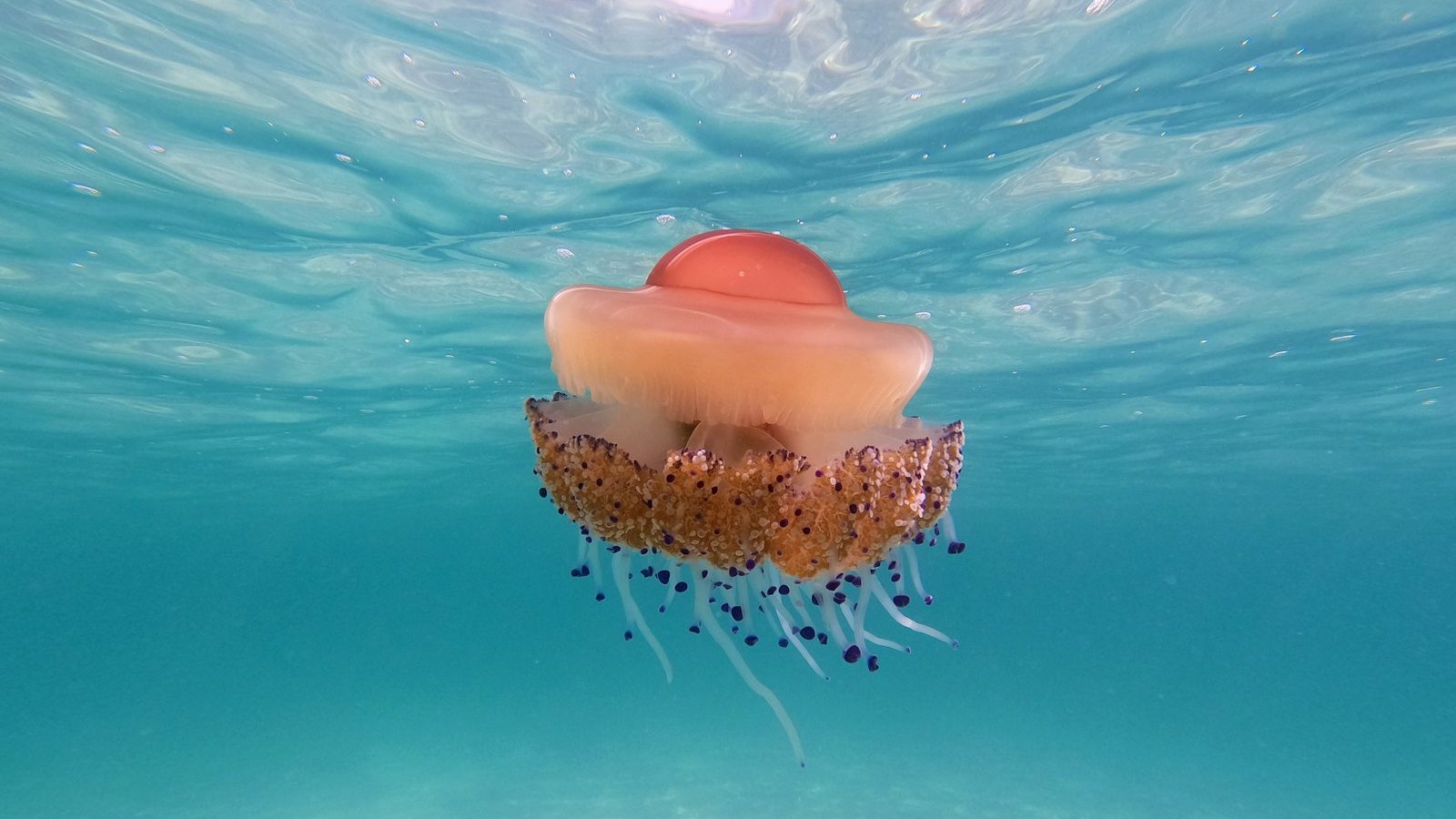
Jellyfish in Halkidiki: when they show up and what to do
Do we get jellyfish every summer?
No. Some years you barely notice them. Other years, certain winds and currents bring them close to shore for a few days, then they disappear again. It is patchy. One beach can be fine while the next bay has a few drifting in.
Where you are more likely to notice them
Jellyfish are carried by currents, so they can appear on open stretches and in bays that “collect” sea life after wind changes. Around Thessaloniki, beaches like Agia Triada and Epanomis can also see jellyfish episodes, especially when the water is warmer and the wind has been pushing in from the open gulf.
In Halkidiki, we tend to hear the most reports from busy swimming beaches because there are simply more eyes in the water. Around Afitos Beach, or the wider Nikiti area, someone will spot one quickly and tell the whole shoreline within five minutes.
Seasonal pattern
- Late spring to early autumn: possible, with peaks often mid-summer depending on conditions.
- After windy days: more likely to see them washed in, including tentacles near the waterline.
How to avoid jellyfish stings (especially with kids)
- Scan the water before kids run in. In calm, clear water you can usually spot jellyfish near the surface.
- Avoid swimming right after strong onshore winds if locals are warning about stingers.
- Teach children not to touch “clear plastic” shapes in the sea or on the sand. Even washed-up tentacles can sting.
- Consider a rash vest for long water days. It is not magic, but it reduces skin exposure.
First aid for jellyfish stings
Stings are usually painful and itchy, sometimes with red welts. Most are manageable with calm first aid. If someone has trouble breathing, swelling of lips or face, widespread hives, vomiting, or severe dizziness, treat it as urgent and get medical help fast.
- Get out of the water calmly. Panic makes kids swallow water and stumble.
- Do not rub the area with a towel or sand. That can fire more stinging cells.
- Rinse with seawater, not fresh water at first. Fresh water can trigger more sting release.
- If you see tentacles, remove with something like a card edge or tweezers, not bare fingers.
- Cool the area with a cold pack wrapped in cloth to reduce pain and swelling.
- Use an antihistamine cream or oral antihistamine if appropriate for the person, and if you normally tolerate it.
Vinegar is often mentioned online. In real life, it depends on the species and it is not a guaranteed fix. If a lifeguard is present, follow their protocol. If not, stick to seawater rinse, careful removal, and cooling. It is boring advice, but it works.
Sea and outdoor activities depend on weather and your own fitness level. Always follow local safety advice and skipper instructions.Other sea animals visitors notice (and how to behave around them)
Small fish that “nibble”
In warm shallow water, especially around rocks and jetties, small fish may peck at dead skin. It feels weird, not dangerous. Kids sometimes squeal and think something bit them. It is usually just curious fish and it stops if you move away from the rocky edge.
- Step into slightly deeper water where there is less fish activity.
- Avoid feeding fish. It encourages them to crowd swimmers.
Sea turtles and dolphins (the lucky sightings)
You might spot a loggerhead turtle offshore or a dolphin pod further out, especially on boat trips. If you are curious about what people often see here, Wildlife in Halkidiki Sea Turtles Dolphins Foxes and Birds Visitors Often See is a good read before you pack binoculars.
- Do not chase or try to touch wildlife.
- Keep boat distance and follow skipper instructions.
- If you see a turtle near fishing line, call the local port police for guidance rather than trying to free it yourself.
Sea anemones and “stingy” rocks
Sometimes the “sting” people blame on jellyfish is actually contact with anemones or tiny organisms on rocks. It happens when you sit on a submerged stone or steady yourself with your hand. Water shoes and not using your palms on rocks helps a lot.
Octopus and moray eels (mostly a diver story)
These are not a typical swimmer issue. Divers and snorkellers might see octopus tucked into rocks, and very occasionally moray eels in deeper rocky holes. They avoid you. Problems happen if someone tries to poke a hole for a photo.
If you are planning to try diving, Beginner’s Guide to Scuba Diving in Halkidiki: What First-Timers Should Know covers the basics, including comfort in the water and what to expect on your first day.
Snorkelling and swimming spots: where to be extra aware
Some of Halkidiki’s best water is where the seabed changes from sand to rock. That is also where you see more urchins and where kids love exploring with goggles. Around Vourvourou, and near Neos Marmaras on beaches like Diaporti and Azapiko, the clarity can be brilliant on calm mornings. You just need to choose your entry point and not assume every patch is soft sand.
Near Nikiti, Agios Ioannis Beach and Koviou Beach are popular for a reason, with lovely colour in the water. They can also have rocky edges. If you stay in the shallows with little ones, pick a sandy run-in and keep shoes on until you are properly floating. It sounds fussy, but it saves tears.
If you want easy snorkelling without guessing conditions on your own, Best Snorkelling Spots in Kassandra and Sithonia You Can Reach on a Tour is useful for choosing places with safer entries and better visibility.
Simple kit that prevents most problems
- Water shoes for every child and any adult who hates surprises
- Mask, even a cheap one, to check the first few metres
- Small tweezers and antiseptic wipes in your beach bag
- Cold pack (or a small insulated bottle so you can make a cold compress)
Boat trips, marinas and ladders: the overlooked risk zone
People are careful on beaches, then step off a ladder at a marina without looking down. Around Porto Carras Marina and other harbour walls, you can get urchins clinging to the stones just under the surface. It is the classic “I only needed one step” moment.
- Always look into the water before using ladders.
- Do not jump in near walls where you cannot see the bottom.
- If you are mooring or boarding with kids, keep shoes on until you are safely in open water.
If you are thinking of a day on the water, If you’d like to explore the coast, ask us about day trips at sea and sailing boat options. fits naturally here. It is also where you can choose calmer coves if a beach is busy or if jellyfish have drifted in.
yachts.holiday is a handy reference if you are comparing the feel of different boat days, from relaxed sightseeing to swim stops, without locking yourself into one specific plan too early.
Kid safety: what we tell families on day one
Rules that actually stick
- “No shoes off until you can float.”
- “If it looks like a balloon in the sea, do not touch.”
- “If you feel a sting, tell us straight away, no brave face.”
Best type of beach day with children
If you have toddlers or very cautious swimmers, pick a wide sandy beach with a gentle slope and clear visibility. Kassandra has many organised options. In Sithonia, you can still find sandy entries, but you might need to walk a little further along the beach to avoid the rocky corners. If you arrive and it feels too wild, do not force it. Move on. You will not regret it.
How to reach these areas (without getting lost or stressed)
Most visitors base themselves somewhere on Kassandra or Sithonia and drive to beaches. From Thessaloniki, Kassandra is usually the quicker run, while Sithonia can take longer depending on where you are headed. Neos Marmaras sits on the west side of Sithonia and works well as a hub for boat trips and exploring nearby coves.
If you are using buses in summer, routes exist between Thessaloniki and the main towns, then local connections to beach areas. Always check the latest updates because schedules change with the season and even with local events. Timetables, opening hours and routes can change without notice. Always double-check locally before you travel.
- For Afitos Beach, you are in Kassandra, with easy access from the main peninsula road.
- For Nikiti, Agios Ioannis Beach and Koviou Beach, you are on Sithonia’s north side, a common base for families.
- For Vourvourou, you are further east on Sithonia, popular for calm bays and boat days.
- For Neos Marmaras, Diaporti, Azapiko and Porto Carras Marina, you are in central-west Sithonia with lots of sea activity.
When to be more cautious: weather, wind, and water clarity
Most sea animal trouble is linked to conditions, not bad luck. After choppy days, visibility drops and you do not see urchins until it is too late. After certain winds, jellyfish drift in. On very hot still days, people stay in the water for hours and small stings become a bigger drama because skin is already irritated.
- Clear, calm mornings: best for snorkelling and spotting hazards early.
- Windy afternoons: more waves, more floating debris, and more surprise contact.
- After storms: avoid scrambling over rocks and check for washed-up tentacles.
If you want a quick feel for conditions before you drive, check the Hellenic National Meteorological Service at hnms.gr. For general marine life context, Wikipedia’s sea urchin overview is surprisingly useful for understanding why spines snap and why they sit on rocks.
Snorkelling and diving: enjoy it without touching anything
The Aegean is at its best when you float and watch. Touching rocks, lifting stones, or grabbing sea grass is when stings and cuts happen. If you want to level up from casual snorkelling to a proper underwater look, do it with a reputable dive centre and proper briefing.
portoscuba.com is a solid local reference for diving in the region, including what beginners often worry about and how guided dives manage safety and comfort.
[random_authority_text]
Practical “if this happens” scenarios we see every summer
“My child stepped on something sharp at Afitos Beach”
- Assume urchin if it was near rocks or a jetty.
- Check for visible black spines.
- Rinse, remove only what is easy, then keep it clean and consider a pharmacy visit.
“We saw jellyfish near the shore at Agios Ioannis Beach”
- Do not make it a drama. Walk 200 metres and check again.
- If you still see them, switch to a different beach with a different exposure to wind.
- Tell kids the rule: look, do not touch, and call you over.
“I got stung but I do not see anything”
- Rinse with seawater and cool the area.
- Think about rock contact or tiny organisms, not only jellyfish.
- If pain spreads or you feel unwell, get medical help.
Useful official resources (worth bookmarking)
- Visit Greece (official tourism site) for general travel guidance and regional context.
- Hellenic National Meteorological Service for weather checks before beach days.
- Jellyfish overview for understanding stings and why tentacles can still irritate on the sand.
Planning help, especially if you want calmer swim stops
If you are building an itinerary around the easiest family beaches, or you want a boat day to dodge crowded shorelines in July and August, Not sure where to start? Contact our local travel agency for friendly, personalised advice, seasonal offers and travel options. and we will point you towards the right base and the right side of the peninsula for your style of trip.
Want the full picture? Read our in-depth Halkidiki travel guide before you book.