Kassandra Gulf sailing that actually feels wild
Kassandra Gulf can look calm and familiar from the beach. From a boat, it feels different. You get these little pockets of clear water, sudden wind lines, and coves that stay quiet even when the roads are busy.
We are Halkidiki.info – travel guide for Sithonia, Kassandra & Mount Athos, and our Our local team of skippers, travel agents and scuba instructors with over 20 years of experience in Halkidiki is here to help you. has been sailing and guiding around Halkidiki for more than 20 years. Kelyfos (the “Turtle Island”) and the Porto Carras coves are two highlights we return to again and again, mostly because they deliver the best mix of easy navigation, snorkelling, and proper scenery.
Where you are: Kelyfos and the Porto Carras coves in the Kassandra Gulf
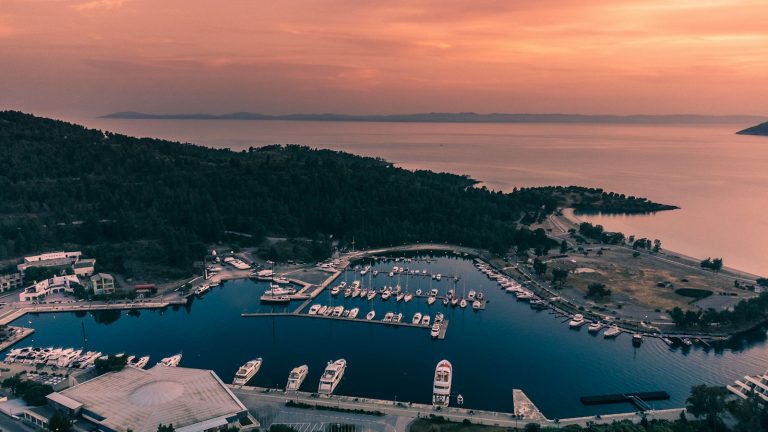
Kelyfos Island sits in the Kassandra Gulf, off the Sithonia side, roughly opposite the Kassandra coastline. It is a small, rocky islet with steep sides and deep water close in, which is why it is such a satisfying sailing landmark. You will often see it on routes that start from Neos Marmaras and Porto Carras marina, or from the Kassandra side if you are coming out of Paliouri and Marina Miraggio.
The Porto Carras coves are the sheltered bays and little inlets around the Porto Carras area, just south of Neos Marmaras on Sithonia. They are not a single beach you “arrive at”, more a sequence of anchor-friendly stops where the water goes glassy and the snorkelling gets surprisingly good.
To help you picture the area if you are planning a route that includes Neos Marmaras, Porto Carras marina, and the Kassandra side villages like Nea Skioni, Agia Paraskevi, and Fourka, it helps to look at a map first.
[halkidiki_map]
How to reach it: bases, marinas, and realistic travel planning
Best jumping-off points
- Porto Carras marina (Neos Marmaras, Sithonia): a practical base with shelter and services. It is also perfectly placed for a short hop to Kelyfos and then a relaxed drift back into the coves.
- Marina Miraggio (Paliouri, Kassandra): a smart option if you are staying on Kassandra’s south end. From here you can cross the gulf, but you need to respect the afternoon breeze and leave time for the return.
- Neos Marmaras village: good for supplies, last-minute bits, and an easy place for non-sailors in the group to meet you. It is lively in summer, a bit chaotic for parking at peak hours, but convenient.
Getting to Halkidiki from Thessaloniki
Most travellers land in Thessaloniki and drive down. For Neos Marmaras and Porto Carras, you are heading to Sithonia. For Marina Miraggio and Paliouri, you are heading to the southern end of Kassandra. In high season, the last stretches into resort areas can be slow, so build in buffer time and do not plan a tight boarding window if you are self-driving.
If you are using buses to reach Neos Marmaras, check the latest schedules and seasonal changes before you commit to a specific plan. Timetables, opening hours and routes can change without notice. Always double-check locally before you travel.
What kind of trip suits you
If you are choosing between a private charter and a shared day out, a small group often hits the sweet spot in this gulf. You get enough flexibility to stop for snorkelling, but you still have a skipper who knows where the gusts funnel and where anchoring is cleanest. This is exactly why we recommend reading Why a Small-Group Sailing Trip Is the Best Thing to Do in Halkidiki in 2026 before you book anything.
Why Kelyfos is called “Turtle Island” (and what you should expect)
Locals and repeat visitors call Kelyfos “Turtle Island” because the shape from certain angles looks like a turtle floating on the sea. People sometimes assume it means you will definitely see turtles every time. Realistically, sightings are occasional, not guaranteed, and that is fine. The real reason Kelyfos is special is the underwater terrain. It drops off quickly, which brings clearer water and more fish movement around the edges.
Also, it photographs brilliantly. Even on a hazy day, the contrast between the pale rock and the deep blue water does a lot of the work for you, if you time it right.
Wind and sea conditions in the Kassandra Gulf: what actually matters on the water
This gulf is friendlier than open Aegean stretches, but it still has patterns. Most summer days start calmer, then the breeze builds. In the afternoon you can get a choppier surface mid-gulf, while the coves near Porto Carras stay more protected.
Typical wind behaviour you will notice
- Morning: flatter sea, best for snorkelling and clean underwater visibility because there is less surface agitation.
- Midday to afternoon: thermal breeze often picks up. You will feel it more when you leave the shelter of the coast and cross open water.
- Near headlands and island edges: wind can accelerate and shift. Around Kelyfos, gusts can feel sharper because the island interrupts the flow.
What this means for your route
- Do Kelyfos earlier if snorkelling is a priority. Less chop equals better visibility and easier reboarding.
- Use Porto Carras coves as your “late day” plan. They are ideal when the gulf gets a bit lumpy.
- If anyone in your group gets seasick, keep the longer crossings short and steady. A direct line is not always the most comfortable line.
Conditions can change quickly with regional weather, so always listen to your skipper and check an official forecast before you go. The Hellenic National Meteorological Service is the reference we use: https://www.hnms.gr/. Sea and outdoor activities depend on weather and your own fitness level. Always follow local safety advice and skipper instructions.
Sailing highlights: the Kelyfos to Porto Carras “two-stop” day
This is the day plan we use most often when friends visit from the UK. It is simple, it feels adventurous, and it avoids the worst of the crowds.
Stop 1: Kelyfos for snorkelling over deep edges
You are not coming here for a sandy beach. You are coming for the colour and the structure. The best snorkelling is usually along the rocky edges where you can look down into blue depth and still have enough light to see fish moving below.
- Look for schools of small fish close to the rocks, especially where there is a little shade line.
- Check the surface first. If there is a lot of sparkle and chop, your visibility will drop fast.
- Do not chase “the perfect spot” too long. Ten minutes of calm, clear water is better than an hour of repositioning.
Stop 2: Porto Carras coves for calm water and easy swimming
After Kelyfos, the coves near Porto Carras are where you slow down. These bays are usually more sheltered, and you can anchor or moor with less stress, depending on the day and what else is already there. The water often goes a shade lighter, and you get that classic “floating above glass” feeling.
It is also the better option if you have kids or nervous swimmers on board, because entry and exit from the boat feels calmer when the sea is not bouncing you around.
Underwater life: what you can realistically see while snorkelling
Let’s keep it honest. This is not a tropical reef. It is Mediterranean snorkelling, and when it is good, it is really good. The key is clarity and light, not just “lots of fish”.
What you will commonly spot
- Small schooling fish around rocky edges and any submerged ledges.
- Sea urchins in the shallows near rocks. Watch your feet and hands.
- Occasional larger fish cruising the drop-offs, especially around Kelyfos where depth comes close.
What affects visibility the most
- Wind: even a moderate breeze can stir surface chop and reduce clarity from above.
- Boat traffic: more prop wash means more suspended particles in the top layer.
- Time of day: late morning often gives the best light angle without the harsh glare.
If snorkelling is your main goal
Use a simple plan. Mask that fits, anti-fog done properly, and fins if you are not a strong swimmer. If you want a broader list of spots that work well on tours around both peninsulas, this guide is the most useful starting point: Best Snorkelling Spots in Kassandra and Sithonia You Can Reach on a Tour.
For diving rather than snorkelling, you will want a different setup and different site choices. If you are considering a proper dive day in Halkidiki, have a look at portoscuba.com for local diving context and what is typically feasible.
Anchoring basics here: what skippers look for around Kelyfos and Porto Carras
Anchoring is where a “nice day” becomes a stressy day, so it is worth understanding the basics even if you are not the one on the helm. Around Kelyfos you are dealing with deeper water close to rock. Around the Porto Carras coves, you often have more forgiving depths and better shelter.
Kelyfos anchoring realities
- Depth comes fast: you may not have endless scope, depending on the boat and the spot.
- Holding varies: rocky patches do not always hold like sand. Your skipper may prefer a short stop with careful positioning rather than a long swim session.
- Wind shifts feel bigger: the island shape can create gusts and eddies. If the boat starts sailing around the anchor, it is normal to relocate.
Porto Carras coves anchoring realities
- More shelter: less swell makes it easier for everyone to get in and out of the water.
- More boats in peak season: you might arrive and find your favourite corner already taken. No drama, there are usually alternatives close by.
- Seabed changes: sand and weed mix. A good set matters, and sometimes you need a second attempt.
If you are on a skippered trip, ask what the seabed is like before you jump in. It sounds nerdy, but it helps you understand why you are stopping where you are stopping, and it keeps everyone calmer, expecially first-timers.
Photography tips: how to shoot Kelyfos and the coves without fighting the light
You do not need fancy kit. You need timing, angle, and a bit of patience. Kelyfos is dramatic from low angles, while the Porto Carras coves look best when you show the water colour and the framing coastline.
For phone photos on deck
- Clean the lens. Salt haze ruins more shots than bad composition.
- Shoot slightly down with the sun behind you for water colour in the coves.
- Use burst mode when the boat is moving. You will get one sharp frame.
For underwater shots while snorkelling
- Get close to your subject. Water eats contrast fast.
- Keep the sun at your back if possible to reduce murk and silhouettes.
- Take a few frames, then stop and enjoy it. People spend the whole swim filming nothing.
Best angles for Kelyfos
Circle it at a respectful distance and look for the “turtle” outline. The most recognisable shape shows when you have the island slightly offset, not straight on. If the wind is up, ask your skipper for a leeward pass so the boat is steadier and you can actually hold the phone still.
Seasonal feel: crowds, water clarity, and comfort through the year
In peak summer, the gulf is busy. You will see more day boats, more noise near popular swimming stops, and more competition for the prettiest corners. The good news is that Kelyfos still feels like a landmark, and the Porto Carras coves still offer pockets of quiet if you arrive with decent timing.
What changes by season
- Late spring to early summer: fresher water, often excellent clarity. Fewer boats, easier anchoring, but the sea can feel cool for long swims.
- High summer: warm water, lively vibe, more traffic. Plan earlier starts for snorkelling quality.
- September: one of our favourites. Sea stays warm, crowds drop, and light is softer for photos.
If you want a wider view of the island-hopping options across Halkidiki, including Kelyfos in context with other islets, this is the page we point people to: Halkidiki Island A 2026 Guide to Kelyfos Ammouliani Drenia Diaporos and the hidden Islets.
Who this route suits (and who should think twice)
Perfect for
- Couples who want a scenic day with a proper swim stop, not just a cruise-by.
- Families with confident swimmers who will love calm coves later in the day.
- Groups that want a mix of sailing time and anchor time, without long transfers.
- Snorkellers who care about clarity and rocky structure more than sandy shallows.
Think twice if
- You want guaranteed wildlife sightings. Nature does what it wants.
- You hate any boat movement at all. Mid-gulf can get bouncy in the afternoon.
- You expect beach bars and facilities at the swim stop. These are boat stops, not organised beaches.
Practical tips from our local runs (the stuff people only learn after)
- Bring reef-safe sunscreen and apply it early. Putting it on right before you snorkel makes your mask seal slippery.
- Pack a light layer for the ride back. After swimming, even warm days can feel chilly with wind on wet skin.
- Use a dry bag for your phone, but still rinse it after. Salt finds a way in.
- If you are prone to motion sickness, eat something small and plain before you board. Empty stomach is worse.
- Do not feed fish. It changes behaviour and it is not great for the ecosystem.
[random_authority_text]
Adding a little extra: Porto Koufo or a Kassandra village stop
If you are doing a longer day, some skippers like to add a second “land feel” moment. Porto Koufo on Sithonia is one of the safest natural harbours in Greece, and on a windy day it can feel like a lake. For a Kassandra-side flavour, Nea Skioni has that fishing-village atmosphere and is a nice reference point when you are tracing the gulf.
Do not overpack the itinerary though. The best days out here have space for a lazy swim, a slow lunch onboard, and time to just float. If you want help matching the route to your group and the wind on the day, Not sure where to start? Contact our local travel agency for friendly, personalised advice, seasonal offers and travel options.
Useful official sources for planning (and one good nerdy read)
- Hellenic National Meteorological Service (forecast): https://www.hnms.gr/
- Municipality of Sithonia (local updates and area info): https://www.sithonia.gr/
- Kelyfos background and geography (quick reference): https://en.wikipedia.org/wiki/Kelyfos_Island
If you are comparing with other calm-water island sailing
Some travellers love Kelyfos for the dramatic rock and deep blue. Others prefer protected, lagoon-like bays. If you are in that second camp, Diaporos off Vourvourou is the benchmark. We have a full piece on it here: Diaporos and the Protected Bays off Vourvourou. It is not the same gulf, but it helps you choose the right vibe.
For sailing days in the Kassandra Gulf, Kelyfos plus the Porto Carras coves is the combo that stays memorable, even if you have done a lot of Greek coast already. For more route ideas and planning help, Want the full picture? Read our in-depth Halkidiki travel guide before you book.
If you’d like to explore the coast, ask us about day trips at sea and sailing boat options.