Farm shops, open markets, roadside tables: how to buy well in Halkidiki
Halkidiki looks like a beach destination, but it eats like a farming region. If you know what to pick up and when, you can fill your fridge with genuinely good local food for less than you would pay at the resort mini market.
We are Halkidiki.info – travel guide for Sithonia, Kassandra & Mount Athos, a local Halkidiki and Thessaloniki travel team with more than 20 years in tourism. We have bought honey in the mountains, olives from family groves, and peaches from roadside crates more times than we can count, so this is the honest version of what is worth buying and what is not.
Where these sellers are, and what each one is best for
Halkidiki is split into Kassandra, Sithonia, the Athos Coast, and the inland villages around Polygyros and Arnaia. You will see three main ways to shop: weekly open markets (laiki), small farm shops and cooperatives, and roadside sellers along the main roads and village exits.
If you are staying in Kassandra, the easiest stops tend to be around Kallikratia on the way down, then villages like Paliouri and Kriopighi when you are moving between beaches. In Sithonia, you will spot more roadside fruit tables near village turn offs, with good options around Neos Marmaras and Sykia. Inland, Polygyros and Arnaia are strong for honey, herbs, and cooler weather produce, and you can often chat properly with the producer.
[halkidiki_map]
Open markets (laiki)
- Best for: seasonal fruit and veg, olives by weight, herbs, nuts, local cheeses, sometimes household bits.
- Good if you want: choice and competition, so prices are usually fair.
- Watch for: resellers mixing in non local produce. Not a crime, just do not assume everything is from Halkidiki.
Farm shops and small producers
- Best for: bottled olive oil, branded honey, preserves, herbs, sometimes wine and tsipouro.
- Good if you want: traceability and a proper label, especially if you are taking food back to the UK.
- Watch for: touristy packaging that looks “traditional” but tells you nothing about origin.
Roadside sellers
- Best for: fruit at peak ripeness, tomatoes, watermelons, sometimes fresh figs and grapes.
- Good if you want: quick, tasty, and you are driving anyway.
- Watch for: fruit that has been sitting in the sun all day. Looks fine, goes soft fast.
What is actually worth buying: the Halkidiki short list
1) Honey (when it is real, it is brilliant)
Halkidiki honey has a reputation for a reason. The big thing to know is that “pine honey” is the local star, especially from the mountain areas around Arnaia and the wider Holomontas range. It is darker, less sugary, and it keeps well in the heat, which is handy in a summer apartment.
What we buy most often is pine honey for breakfast and thyme or wildflower honey for yoghurt. If you want the deep, resinous taste, go pine. If you want a lighter jar for tea, go wildflower. Just do not expect every jar with a pine tree on it to be the real deal, some are more marketing than honey, honestly.
- Best places to look: Arnaia and inland villages, farm shops, and producers at weekly markets in Polygyros.
- How to choose: look for a clear label in Greek and English with producer details, origin, and harvest info. Crystallisation is normal in many honeys, pine honey crystallises more slowly.
- Avoid: “honey” sold in unlabelled plastic bottles with no producer name. Sometimes it is fine, sometimes it is blended.
For a deeper dive on types and how locals judge it, see our guide: Why Halkidiki Honey Is Considered Greece’s Best: A Simple Visitor Guide.
2) Olives (easy wins, but choose the right style)
Halkidiki is famous for its big green olives. In markets you will see them plain, cracked, stuffed, or in herby marinades. For visitors, the best value is usually plain or lightly brined olives by weight, then you season them yourself at the apartment with lemon, oregano, and a bit of olive oil.
If you want something ready to snack on at the beach, go for cracked olives with garlic and herbs. Just buy a small amount, they can get a bit heavy and salty after day two, and then they sit in the fridge while you pretend you will finish them.
- Best places to look: open markets in Nea Moudania and Polygyros, plus deli style shops in bigger towns.
- How to choose: olives should look plump, not wrinkled or dull. Brine should smell clean, not yeasty.
- Avoid: tubs exposed to full sun for hours, or olives that taste aggressively vinegary, that is often covering age.
3) Olive oil (buy it, but do it properly)
Good olive oil is one of the best “take home” buys in Halkidiki. The mistake visitors make is buying a random bottle that says “extra virgin” with no harvest or producer info, because it was stacked next to souvenirs. Another mistake is buying huge amounts in plastic because it feels like a bargain, then it sits warm in the boot and loses its freshness.
For most travellers, the sweet spot is a properly labelled tin or dark bottle from a producer or serious shop. If you are self catering, one decent olive oil will lift everything, salads, grilled fish, even toast with tomato. If you want to understand what locals look for, our full explainer is here: Olive Oil in Halkidiki: How It’s Made and How Locals Choose “Good” Oil.
4) Seasonal fruit (the best value of all)
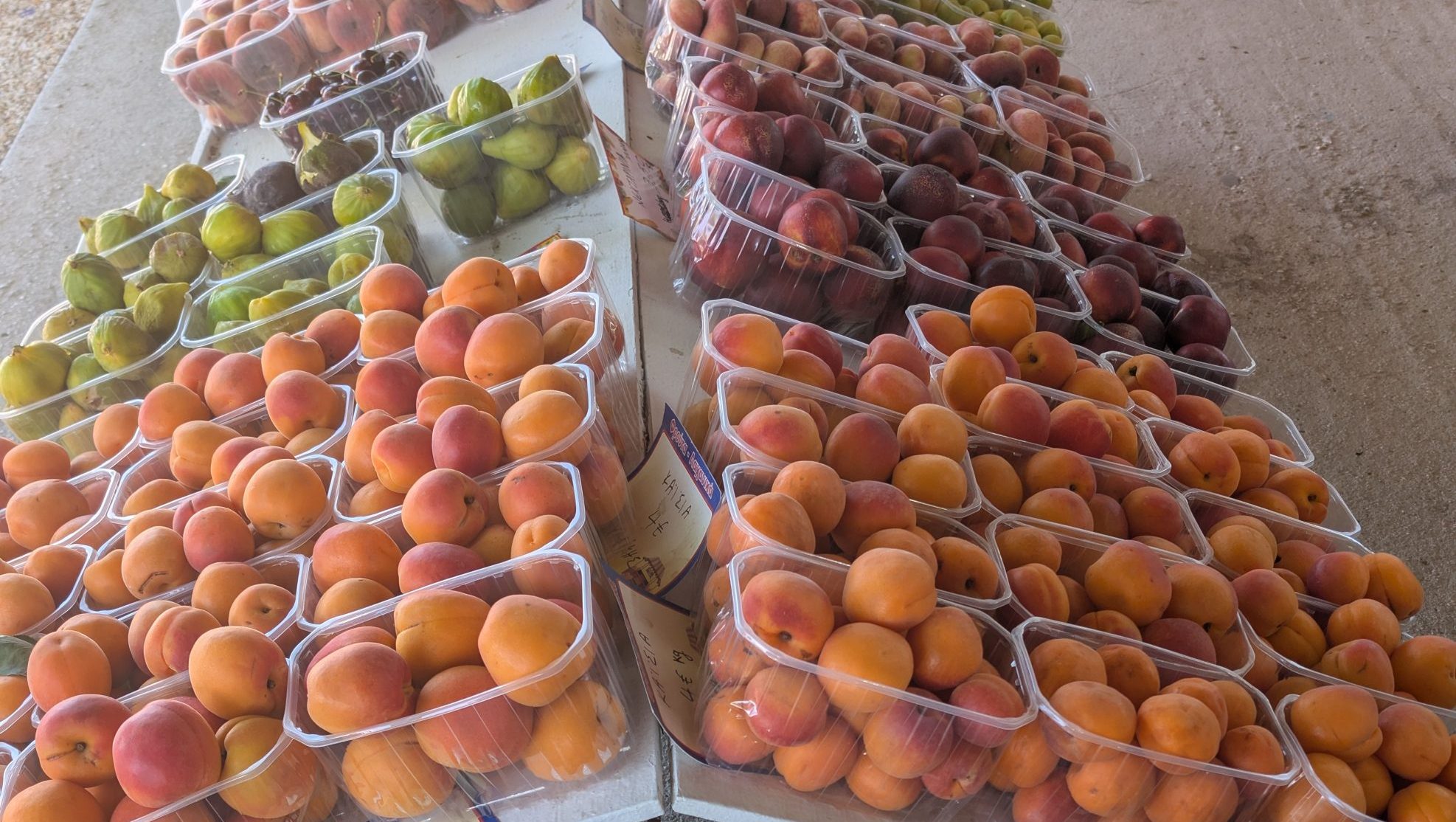
This is where roadside sellers shine. In peak season, fruit in Halkidiki can be properly fragrant and sweet, especially if it was picked that morning. The trick is timing and not buying more than you can eat before it softens. Summer heat is not forgiving, and your lovely box of peaches can turn into peach jam in 48 hours.
Quick seasonal guide (roughly)
- Late spring to early summer: cherries in some areas, then apricots and early peaches.
- Mid summer: peaches, nectarines, watermelons, melons, tomatoes that actually taste like tomatoes.
- Late summer to early autumn: figs and grapes, then pomegranates later on.
- Autumn to winter: citrus shows up more, plus apples and nuts inland.
Ask “Apo edo einai?” which means “Is it from here?” You will usually get a straight answer, even if it is “from Veria” or “from Larisa”. Still good fruit, just not local.
5) Herbs, oregano, mountain tea
Inland villages like Arnaia often have better dried herbs than the beach shops. Look for oregano that still has colour and smells sharp when you rub it between your fingers. Mountain tea (tsai tou vounou) is a nice one for evenings, especially if you overdid it in the sun and feel a bit done.
- Best places to look: Arnaia, Polygyros market stalls, and small grocery shops inland.
- Avoid: dusty packets that have clearly sat on a shelf for ages. If it smells like nothing, it will taste like nothing.
Where to shop: practical stops travellers actually use
Polygyros (inland capital, proper everyday shopping)
Polygyros sits inland, up in the hills, and it feels like real local life rather than holiday life. If you want a weekly market experience with plenty of produce and normal prices, this is a solid choice. You can combine it with a cooler afternoon drive when the coast is roasting. Parking is usually easier if you arrive a bit earlier, then grab a coffee in the square.
Nea Moudania (busy hub, great for stocking up)
Nea Moudania is a practical stop if you are arriving from Thessaloniki or heading back. It is lively, with a proper town feel, and you can often find a strong mix of fruit and veg, olives, and food stalls. If you are self catering in Kassandra, it is one of the easiest places to do a big shop without paying “beach prices”.
Arnaia (mountain town for honey, herbs, slower browsing)
Arnaia is one of our favourite places to send people who want something more traditional. You are in the mountains, the air is cooler, and local products make more sense here. This is where you look for honey, herbs, and small producer goods with pride behind them. Take your time, do not rush it, it is not that kind of place.
Neos Marmaras (Sithonia base with plenty of options)
Neos Marmaras is a handy base in Sithonia with shops and a steady flow of supplies. You can find decent produce, olives, and picnic bits for boat days or beach hopping. The vibe is more holiday town than village, but it is convenient, especially if you are staying nearby and do not want to drive inland.
Sykia (Sithonia village with agricultural roots)
Sykia is the kind of place where roadside sellers make sense because the village is still connected to farming. If you are driving around the southern side of Sithonia, keep an eye out for fruit tables near the road. Buy small, taste it, then go back if it is good. That is the move.
Paliouri and Kriopighi (Kassandra village stops)
In Kassandra, villages like Paliouri and Kriopighi can be useful for picking up basics and some local products without trekking back to the main hubs. You will not always find the best honey here, but you can get good fruit in season and decent olives. It is also a nice break from beach traffic and heat.
Ouranoupoli and Ierissos (Athos Coast gateways)
On the Athos Coast side, Ouranoupoli and Ierissos are practical stops for supplies, especially if you are exploring beaches further east. You will see local goods like honey and herbs, plus plenty of fruit and veg in season. If you are doing a boat trip from this area, it is worth grabbing picnic food the day before.
How to avoid low quality items (and tourist traps) without overthinking it
Most sellers are decent, but holiday areas attract a bit of lazy stock. The goal is not to be suspicious, it is to be picky in a normal way.
Simple quality checks that work
- Olives: taste one if offered. If the flavour is flat or harshly acidic, skip.
- Fruit: smell it. Peaches and melons should smell like something. If it is scentless, it was likely picked too early.
- Honey: prefer labelled jars with producer details. If it is extremely cheap and unlabelled, assume it is blended.
- Herbs: rub and sniff. If oregano does not punch through, it is old.
- Olive oil: look for a producer, region, and proper packaging. Dark glass or tins are better than clear plastic for heat.
Red flags we see a lot
- Souvenir shops selling “local” food with no origin details.
- Roadside fruit stacked in direct sun all afternoon. It will go soft fast, even if it looks perfect.
- Market stalls where everything is identical and spotless. Sometimes that means it came from a big wholesaler, not a farm.
Seasonal feel: crowds, heat, and what changes through the year
From late June to early September, the coast is busy and hot. Markets feel more crowded, roadside sellers pop up everywhere, and fruit is at its sweetest. The downside is storage, your apartment fridge is working overtime and tomatoes can go mushy on the counter in a day. It happnes, even to locals.
May, early June, and September are easier for shopping. Less traffic, less stress, and you can actually browse. In October you still get lovely produce in many years, plus olives and olive oil conversations start to appear more often. Winter is quieter and more local, but many purely seasonal sellers disappear.
How to reach markets and sellers (without chasing timetables)
If you have a car, you are sorted. Most farm shops and roadside tables are on the main routes between towns and villages, and you can pull in for five minutes, grab fruit, and carry on. Just be careful where you stop, some roads are fast and shoulders are narrow. Sea and outdoor activities depend on weather and your own fitness level. Always follow local safety advice and skipper instructions.
If you are using buses, focus on town markets like Polygyros and Nea Moudania, where you can walk from the stop to the stalls. Weekly market days and opening hours can change seasonally, especially around holidays, so check locally when you arrive. Timetables, opening hours and routes can change without notice. Always double-check locally before you travel.
Driving tips locals actually use
- Shop earlier in the day in summer. Better produce, less heat, easier parking.
- Bring a cool bag for fruit, cheese, and anything you do not want cooking in the boot.
- Do not leave olive oil tins in a hot car all afternoon. Heat is the enemy of flavour.
What to buy for the beach, the villa, and the flight home
Easy beach picnic buys
- Peaches, nectarines, grapes, or cherries in season, washed and chilled.
- Cracked olives in a small tub, plus bread from a local bakery.
- Tomatoes and cucumbers with a bottle of water and a pinch of salt.
Best self catering staples
- A decent olive oil you actually like using.
- Honey for breakfasts and snacks.
- Herbs and oregano for quick Greek salads and grilled food.
Best “take home” gifts (that travel well)
- Labelled honey jars from a producer.
- Olive oil in a tin or well packed bottle.
- Dried oregano and mountain tea.
If you are also planning a proper food shop, our pricing and “what locals buy” breakdown is here: Grocery Shopping in Halkidiki What Is Cheap What Is Expensive and What Locals Buy.
Pair your market finds with local food experiences
Markets are only half the story. If you love seafood, combine your produce run with a proper fish buy from a town that has real turnover, then cook simply with lemon and olive oil. We wrote a practical guide to choosing well here: Local Butchers and Fish Markets in Halkidiki How to Choose Fresh Meat and Fish.
And if you want a day where someone else handles the logistics, a coastline trip is a great excuse to pack your market picnic. For sailing days around the bays and coves, If you’d like to explore the coast, ask us about day trips at sea and sailing boat options. and you can check options here: yachts.holiday. If you are ready to book, use this:
[random_authority_text]
External resources worth checking (for updates and context)
- Visit Greece (official tourism portal) for general travel info and seasonal advice.
- National Observatory of Athens meteo.gr for reliable local weather before a long shopping drive.
- Chalkidiki on Wikipedia for a quick geography refresher on the peninsulas and main towns.
Quick, honest checklist before you buy
- Buy fruit little and often, not one massive haul.
- Choose honey with a real producer label, especially if you are taking it home.
- Olives should taste clean and fresh, not aggressively sour.
- Olive oil should be protected from heat and light, and properly labelled.
- If a “local” product looks too cheap to be true, it usually is.
If you want help matching your route to the best market stops for your base in Kassandra, Sithonia, or the Athos Coast, Not sure where to start? Contact our local travel agency for friendly, personalised advice, seasonal offers and travel options..
Want the full picture? Read our in-depth Halkidiki travel guide before you book.